Table of Contents
- Why Your Artificial Turf Smells Worse on Hot Days
- The Science Behind Artificial Turf Odors
- 5 Main Causes of Artificial Turf Smell
- Why Hosing Down Your Turf Doesn't Work
- Why Enzyme Cleaners Fall Short
- How to Prevent Artificial Turf Odors
- How to Fix Existing Turf Odors
- FAQs
- Ready to Eliminate Turf Odors for Good?
Why Your Artificial Turf Smells Worse on Hot Days
Step outside on a sunny afternoon and you might hit a wall of ammonia stench wafting from your artificial turf. That smell gets noticeably worse as temperatures climb, turning your backyard into a space you'd rather avoid.
Artificial turf absolutely can develop strong odors, especially with regular pet use. Pet urine, heat, and synthetic materials create perfect conditions for persistent smells that only get worse over time.
This guide breaks down exactly why artificial turf smells, what makes the problem worse, and proven methods to prevent and eliminate odors for good.
The Science Behind Artificial Turf Odors
Artificial turf odors come from chemical and biological processes that natural grass handles differently. When pets urinate on synthetic turf, uric acid crystals form and stick to the turf fibers and infill material.
Natural soil contains beneficial microbes that break down organic waste. Artificial turf doesn't. The synthetic surface traps heat, accelerating bacterial growth and intensifying odor compounds.
Bacteria thrive on trapped urine residue, producing ammonia that builds up over time. Plastic turf fibers and rubber infill trap these smell-causing compounds instead of allowing them to break down naturally like they would in soil.
Heat turbocharges this process. Rising temperatures cause volatile organic compounds to evaporate more rapidly, explaining why your turf reeks on hot, sunny days.
5 Main Causes of Artificial Turf Smell
Pet Urine Accumulation
When dogs urinate on synthetic turf, the urea in their waste gradually converts to ammonia. Unlike natural grass, artificial fibers can't break down these compounds naturally, so they accumulate over time and create increasingly strong odors.
Female dogs and senior pets tend to produce more concentrated urine. If you have multiple dogs using the same spots, the smell intensifies dramatically.
Poor Drainage Systems
Inadequate drainage creates the worst-case scenario for turf odors. When urine pools beneath the surface instead of draining away, bacteria multiply rapidly in these stagnant conditions and release hydrogen sulfide gases.
Turf installed without proper base preparation often develops drainage problems. Low spots become odor hotspots where liquids collect.
Infill Material Contamination
Sand, rubber, or synthetic infill absorbs and holds onto odor-causing compounds. Once contaminated, infill acts like a sponge that keeps releasing bad smells.
Natural infill materials like cork or coconut fiber turn into breeding grounds for mold and bacteria. Even antimicrobial infill loses its punch over time, leaving you with the same stinky problems you tried to avoid.
Heat Amplification
Blazing sun pushes artificial turf temperatures past 150°F, speeding up chemical reactions that release trapped odors. Dark turf absorbs more heat than lighter colors, and south-facing areas get hammered with sun all day long.
Lack of Regular Maintenance
Without routine cleaning, organic debris accumulates in turf fibers. Dead bugs, fallen leaves, food scraps, and pet waste all contribute to the stench. Without regular rinsing, dried urine crystallizes and becomes a nightmare to remove.
Why Hosing Down Your Turf Doesn't Work
Water can't dissolve uric acid crystals that have bonded to synthetic fibers. Sure, hosing might dial down surface odors temporarily, but it's not addressing what's really causing the problem.
Water alone can't break down the organic compounds causing odors. Sometimes it just moves contamination around to previously clean areas of your turf.
High-pressure water can push urine deeper into the infill where it becomes even harder to reach. You might think you've cleaned it, but odors return within days.
Why Enzyme Cleaners Fall Short
Enzyme products rely on biological processes that work slowly and need specific conditions. Temperature extremes, pH levels, and UV exposure can kill enzymes before they finish working.
Most enzyme cleaners need long contact time and moisture to work properly. Artificial turf's quick-draining surface doesn't provide the right environment for enzyme activity.
Enzymes target specific compounds but may miss the full range of odor-causing substances in pet urine. Incomplete breakdown leaves residual smells that come back. See our full hydrogen peroxide vs enzyme cleaners breakdown for a side-by-side comparison.
How to Prevent Artificial Turf Odors
Establish a Regular Cleaning Schedule
For a full routine broken down by day, week, and month, see our complete artificial turf maintenance guide.
Target high-traffic areas weekly and tackle the entire turf monthly. Remove solid waste immediately to prevent organic matter from decomposing in the fibers.
When possible, rinse urine spots within 24 hours. This dilutes the concentration before it penetrates deep into the turf system.
Improve Air Circulation
Cut back plants that block airflow over your turf. Better ventilation helps moisture evaporate and cuts down on bacteria-friendly conditions.
For enclosed turf areas, consider adding fans or ventilation systems. Moving air stops stagnant conditions where odors love to build up.
Use Proper Cleaning Products
Choose cleaners made specifically for artificial turf that break down organic compounds at the molecular level. Avoid household cleaners that might damage synthetic fibers.
Look for products that oxidize odor-causing compounds rather than just covering them up. Oxidation eliminates the smell source permanently.
Monitor Drainage Performance
Check for standing water after rain or cleaning. Address drainage problems immediately to stop bacterial growth in standing water.
You might need drainage upgrades like French drains or better base materials. Proper water flow prevents the conditions that create odors.
How to Fix Existing Turf Odors
Deep Cleaning Process
Remove visible debris and solid waste first. Use a stiff brush to work turf fibers loose and knock out embedded particles.
Apply a specialized turf cleaner that gets deep into the infill layer. Work the cleaner into problem spots with a brush or broom to ensure complete coverage.
Oxidation Treatment
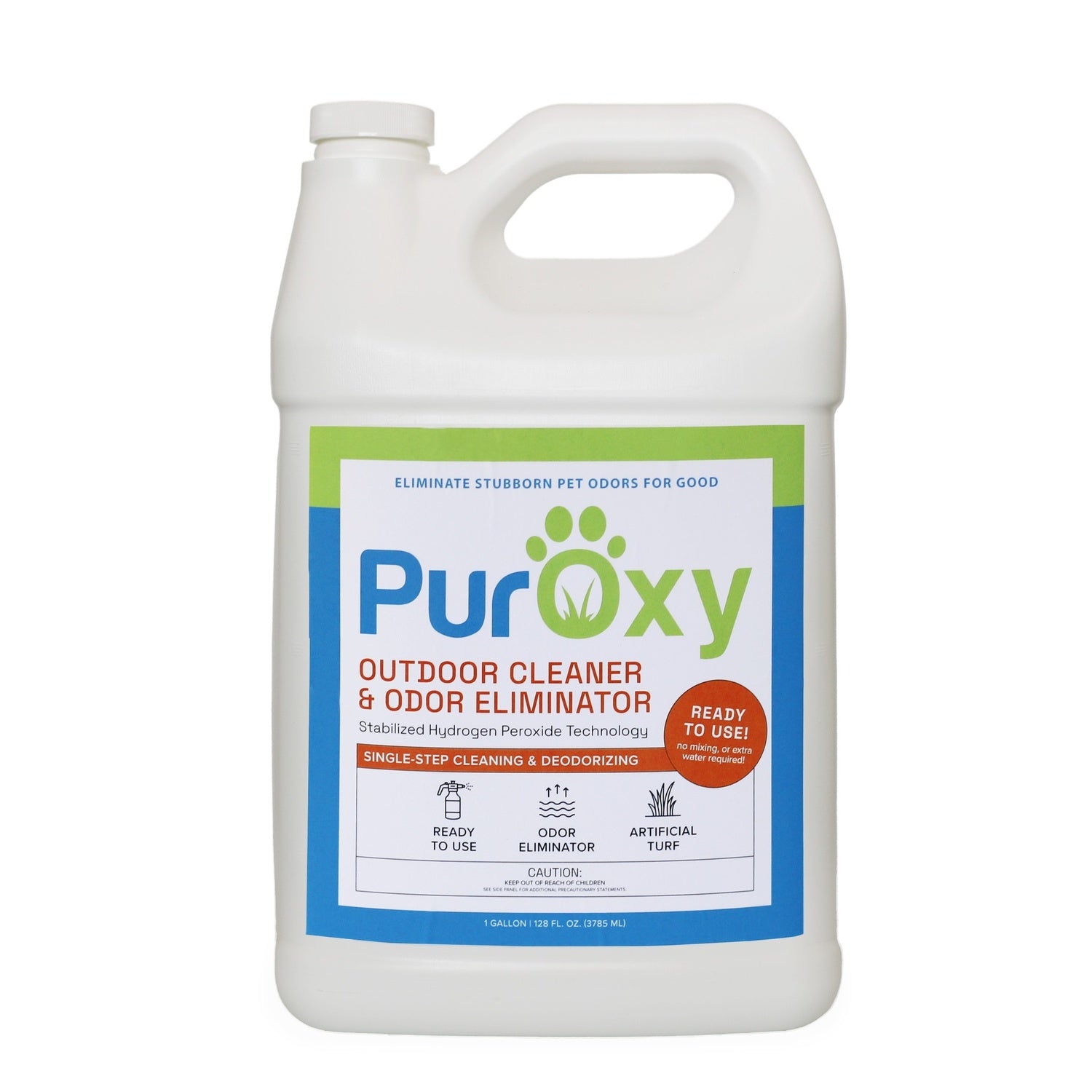
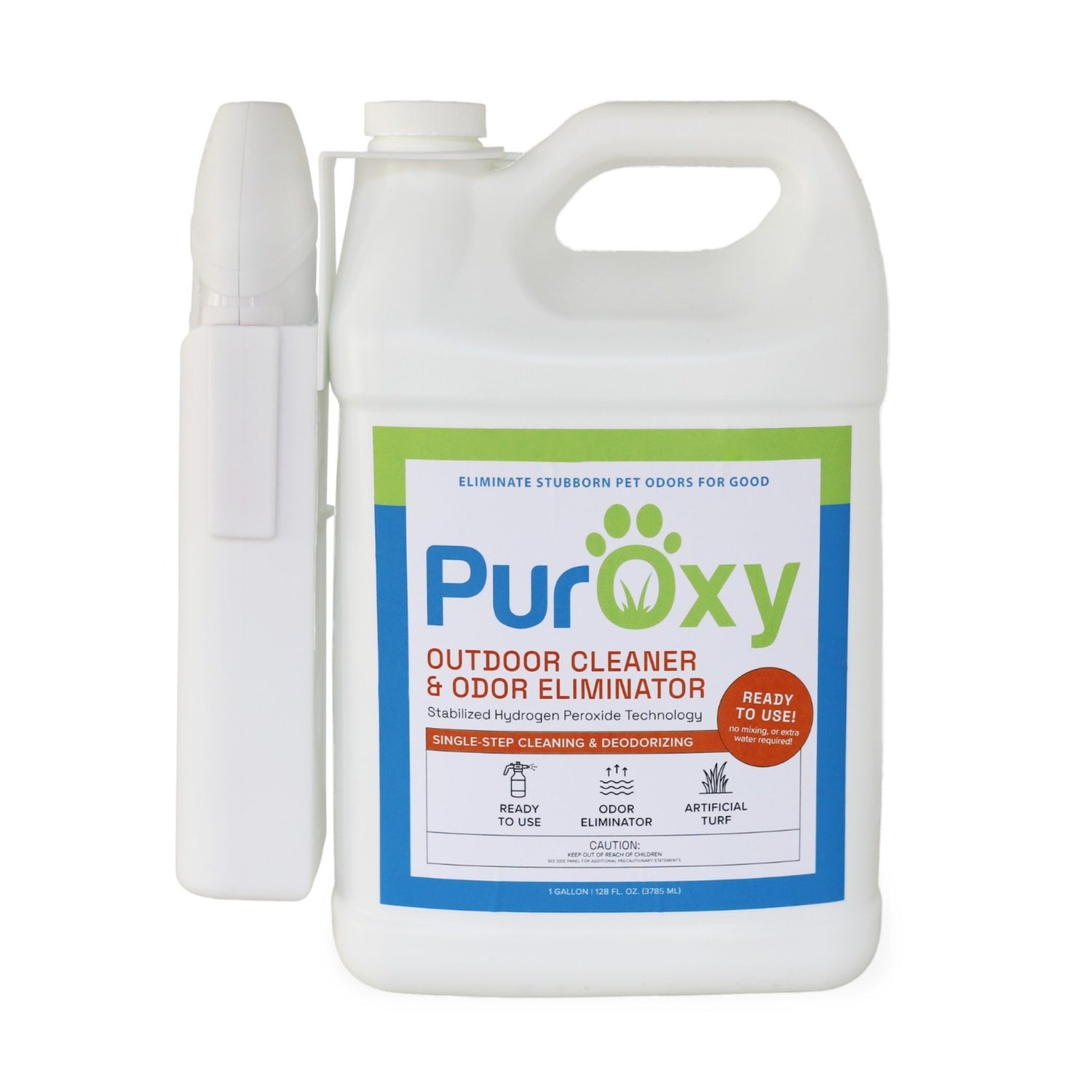
Cleaners with stabilized hydrogen peroxide break down organic compounds through oxidation. PurOxy's 6% hydrogen peroxide formula dissolves uric acid crystals and eliminates odor sources completely rather than masking them.
This approach works faster than enzyme treatments and weather won't affect its performance. The oxidation process neutralizes existing odors while preventing future buildup.
Learn more about how the formula works at the science behind PurOxy.
Infill Replacement
Sometimes heavily contaminated infill needs partial or complete replacement. Remove the top layer of infill material and dispose of it properly.
Fresh infill gives you a clean foundation, especially when you combine it with an oxidizing treatment. This approach gives you the best shot at keeping your turf odor-free long-term.
Professional Assessment
Stubborn odor problems might need professional turf cleaning services. These specialists have industrial-grade equipment and know how to handle tough installations.
Professional teams can spot underlying problems like poor drainage or installation defects. Fixing these root causes prevents the same odor issues from coming back.
FAQs
Why does my artificial turf smell worse in summer?
Heat accelerates the breakdown of organic compounds and causes volatile odor molecules to evaporate more rapidly. Higher temperatures also boost bacterial activity, creating more ammonia and other foul-smelling gases. Synthetic turf surfaces can exceed 150°F in direct sunlight, intensifying these processes significantly.
Does artificial turf always smell?
No, well-maintained artificial turf shouldn't have persistent odors. New installations typically don't smell until organic contamination builds up over time. Regular cleaning with the right products prevents odor development and keeps turf fresh.
How do I stop my artificial turf smelling like dog urine?
Use an oxidizing cleaner with hydrogen peroxide to break down uric acid crystals that cause persistent ammonia odors. Clean affected areas right after pets use them, and set up a weekly deep-cleaning routine for high-traffic zones. Good drainage prevents urine from pooling under the surface.
Is artificial turf worth it with dogs?
Artificial turf can work great for dog owners who keep up with maintenance. You get a durable, mud-free surface that won't develop dead patches like natural grass. Success comes down to choosing quality turf with good drainage and staying committed to regular cleaning with products that actually eliminate odors.
How often should I clean artificial turf with pets?
Hit high-use areas weekly and clean the entire surface monthly. Remove solid waste right away and rinse urine spots within a day when you can. Hot weather and heavy pet traffic mean you'll need to clean more often to stay ahead of odor problems.
Can I use bleach on artificial turf?
Skip the bleach - it damages synthetic fibers and backing materials while creating potentially dangerous reactions with organic matter. Stick with cleaners made specifically for artificial turf that eliminate odors without damaging the material.
What's the best way to remove pet odors from artificial turf?
Hydrogen peroxide-based cleaners that oxidize odor compounds work best because they eliminate the smell at its source instead of covering it up. Work the product deep into both the turf fibers and infill material for complete treatment.
Ready to Eliminate Turf Odors for Good?
You don't have to live with smelly artificial turf. The right maintenance approach and cleaning products can keep your outdoor space fresh and enjoyable for both you and your pets.
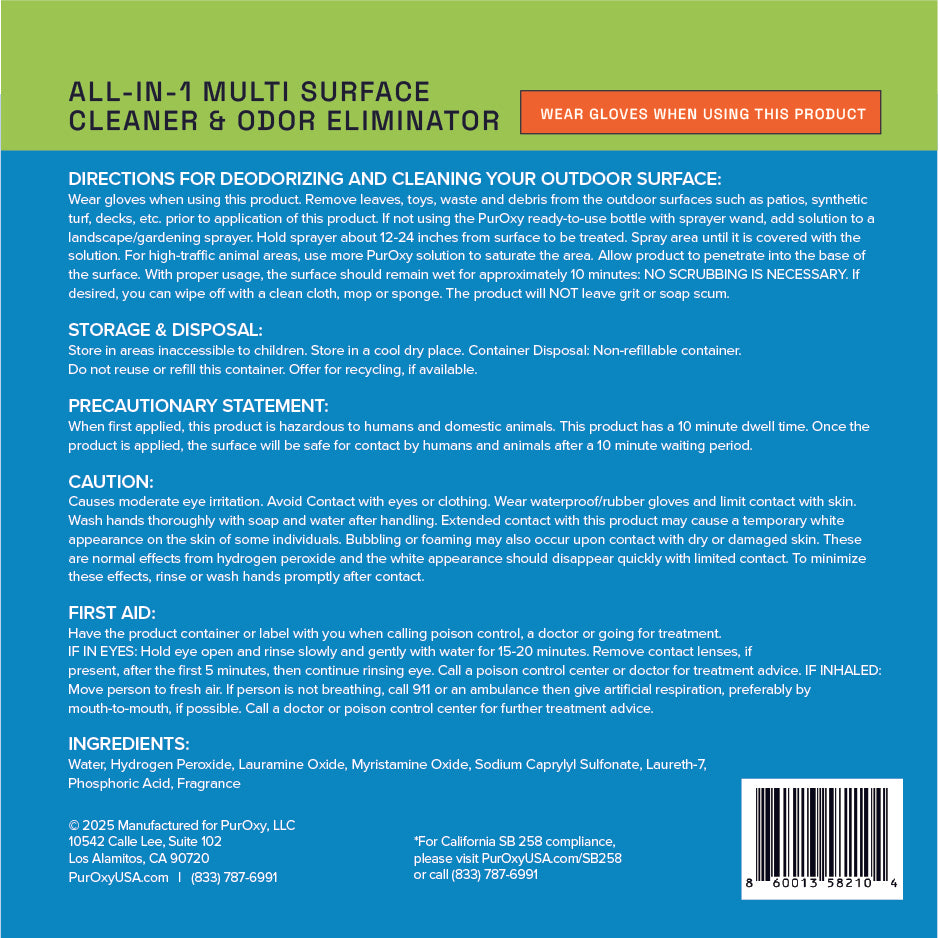
PurOxy's stabilized hydrogen peroxide formula provides the oxidation power needed to eliminate pet odors at the source. The ready-to-use spray works in under 10 minutes with no mixing or rinsing required.
Learn more at puroxyusa.com and discover how to keep your artificial turf odor-free.