Table of Contents
- The Frustrating Reality of Persistent Turf Odors
- Why Standard Cleaning Methods Miss the Mark
- The Science Behind Stubborn Uric Acid Crystals
- Why Enzyme Cleaners Fail on Artificial Turf
- How Hosing Down Makes Things Worse
- Why Rain and Heat Intensify the Problem
- The Real Solution: Molecular-Level Oxidation
- Step-by-Step Deep Clean Fix
- Prevention Routine to Stop Odors from Returning
- FAQs
- Conclusion
The Frustrating Reality of Persistent Turf Odors
You scrubbed your artificial turf with soap and water yesterday. It looked spotless. It smelled fresh. Then it rained overnight, and this morning your backyard reeks worse than before.
You're not alone. Thousands of pet owners get stuck in this cycle every month. They clean, buy expensive products, follow every tip online — and the smell keeps coming back.
Here's the truth: it's not your technique. It's not lack of effort. The real problem hides beneath the surface, where standard cleaning can't reach.
Why Standard Cleaning Methods Miss the Mark
Most people clean turf like a kitchen counter: spray, scrub, rinse, done. That works for everyday dirt. Pet urine is a different problem entirely.
Urine doesn't sit on top like spilled coffee. It soaks into the infill beneath the grass blades and undergoes chemical changes that surface cleaning can't touch.
Water-based cleaners and dish soap only handle what you can see. They can't break the molecular bonds that form when urine crystallizes in the infill. That's why you can scrub the same spot five times and still smell ammonia days later.
Most cleaning guides only address the surface. That leaves pet owners stuck scrubbing the same spots without ever fixing what's happening underneath.
The Science Behind Stubborn Uric Acid Crystals
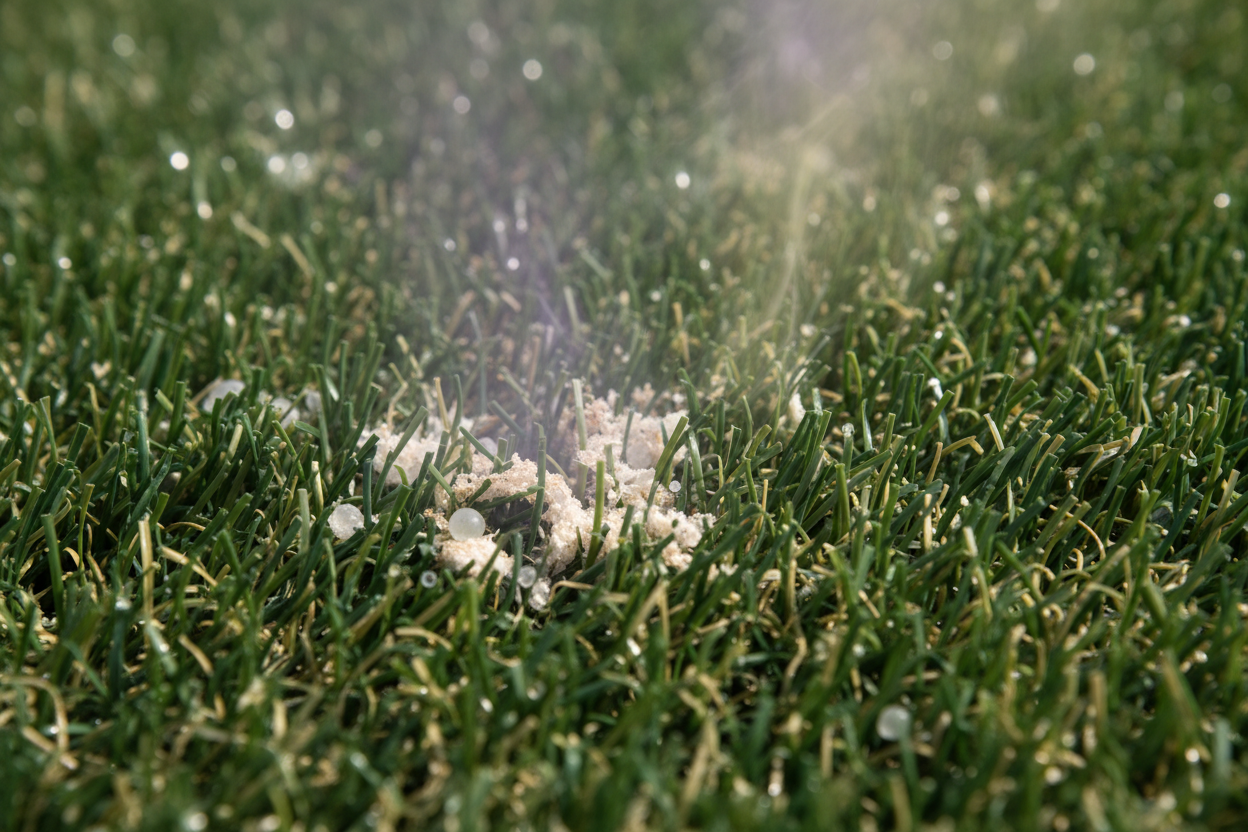
Pet urine contains uric acid, which behaves differently from other organic compounds. When urine hits your turf, the water evaporates fast — especially in warm weather. What's left behind are concentrated uric acid crystals that bond to the infill like glue.
These crystals resist water. You could hose the area for an hour and they'd still sit there, waiting to reactivate when conditions are right. This is exactly why does artificial turf smell becomes such a persistent headache for pet owners.
Artificial turf infill is usually sand, rubber crumb, or cushioning material. It cushions your feet and holds the grass upright — but it also creates thousands of tiny pockets where uric acid crystals hide and build up over months.
Soap molecules are too big to reach those microscopic pockets. Even when soap touches a deposit, it lacks the chemical strength to break the crystal bonds. The crystals simply wait for the soap to wash away, then get back to producing odor.
Why Enzyme Cleaners Fail on Artificial Turf
Enzyme cleaners work well on natural surfaces like concrete or wood, where they can settle in and break down organic matter over time. Artificial turf throws them off completely.
First, turf gets brutally hot in summer — direct sunlight can push it past 150°F. That heat destroys the proteins in enzyme cleaners instantly. The exact conditions that make pet odors worst are the same conditions that kill enzyme effectiveness.
Second, turf drainage works against enzymes. Infill is designed to let water flow through fast, so enzyme solutions get washed away before they can build the bacterial colonies needed to break down organic matter.
Finally, enzymes need specific pH and moisture levels to survive. Concentrated urine is alkaline, and turf dries fast — together, that's a hostile environment for enzyme survival.
Our detailed comparison of hydrogen peroxide vs enzyme cleaners breaks down why oxidation beats biological approaches on synthetic surfaces.
How Hosing Down Makes Things Worse
When turf starts reeking, most people grab the garden hose and flood the area. It feels like the obvious move, and it gives temporary relief — but it usually backfires.
Water can't dissolve uric acid crystals. It just pushes them around. Hosing spreads crystals into clean areas and activates dormant deposits, which then release concentrated odor as everything dries.
Excess moisture also invites bacteria into your turf. Those bacteria feed on organic matter in the infill and produce their own smells, stacking new odor problems on top of the original urine stench.
Here's the irony: turf drains so well — which is great for most purposes — that it works against deep cleaning. Water rushes through fast, dragging contaminants deeper into the infill where surface treatments can't reach.
Why Rain and Heat Intensify the Problem
Rain and heat create a perfect storm for turf odors. Here's what happens as weather shifts:
Rain acts like an alarm clock for dormant uric acid crystals. As the surface dries afterward, those crystals release concentrated odor into the air. Many pet owners first notice the problem on the first sunny day after rain — now you know why.
Heat speeds up the whole process. Higher temperatures make evaporation faster and turn odor compounds airborne more easily. Those scorching afternoons when your turf looks bone dry? That's prime time for odor to escape into your yard's air.
Humidity adds another layer — it slows evaporation and traps odor molecules near ground level. Instead of dispersing, those smells linger and build, creating that thick, nasty atmosphere that can sit for hours.
The Real Solution: Molecular-Level Oxidation
Getting rid of stubborn turf odor means taking a different approach entirely. Instead of washing away or digesting organic matter, oxidation attacks the molecular structure of the odor-causing compounds directly.
Stabilized hydrogen peroxide releases oxygen molecules that tear apart uric acid crystals at their foundation. This isn't a cover-up or temporary fix — it destroys the source compounds so they can't reactivate later.
Unlike enzymes, oxidation works immediately and doesn't need perfect conditions to succeed. The reaction starts on contact and keeps neutralizing organic matter until it's done. That reliability is exactly what turf needs, where extreme heat and fast drainage usually defeat biological cleaning methods.
Learn more about how this works on our the science page, which explains how stabilized hydrogen peroxide stays effective even in tough outdoor conditions.
Step-by-Step Deep Clean Fix
Eliminating stubborn turf odor means going after the uric acid crystals hiding deep in the infill. Here's how:
Step 1: Clear Surface Debris
Pick up any visible waste, leaves, or debris. Use a stiff brush to work the grass fibers and loosen anything stuck in the infill.
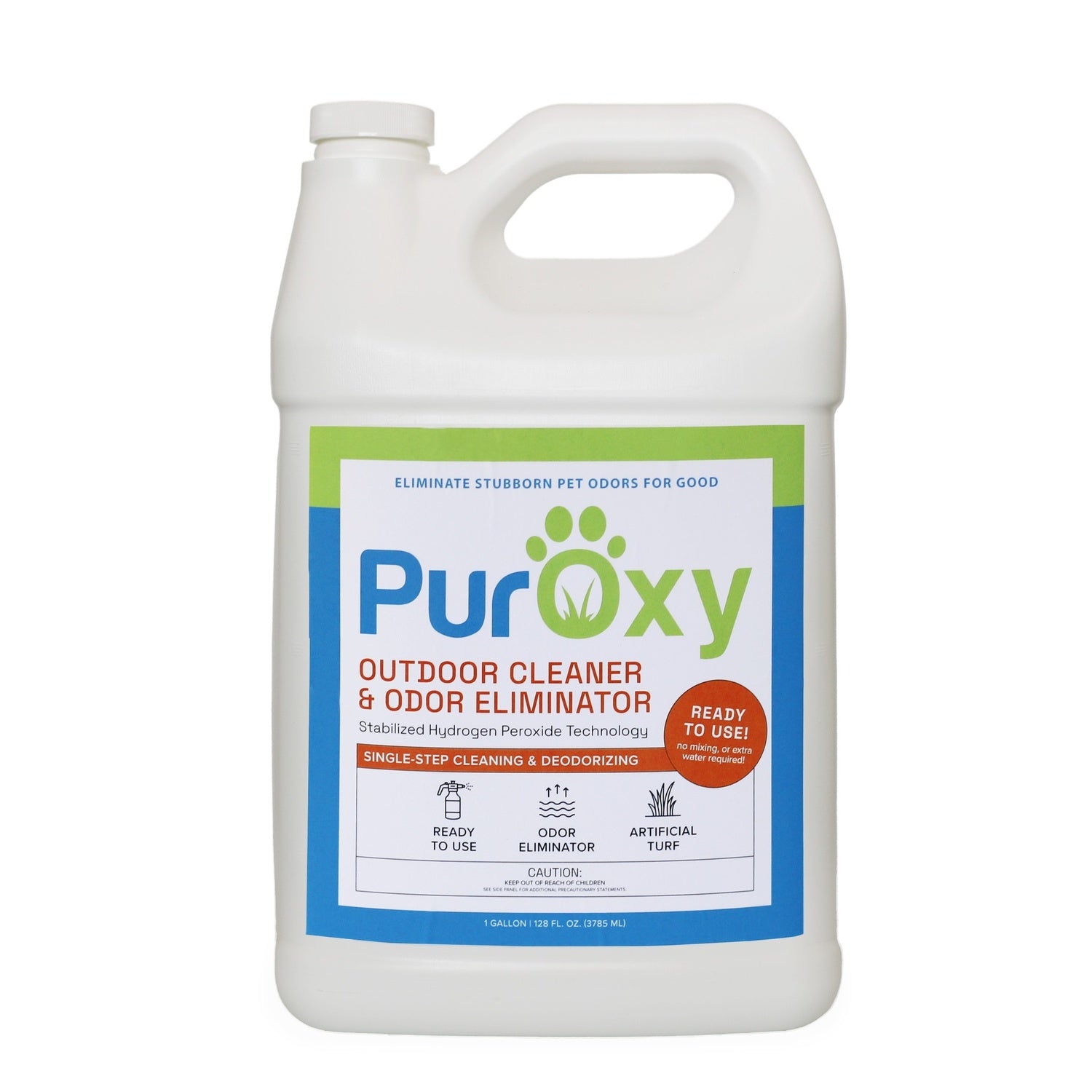
Step 2: Apply PurOxy
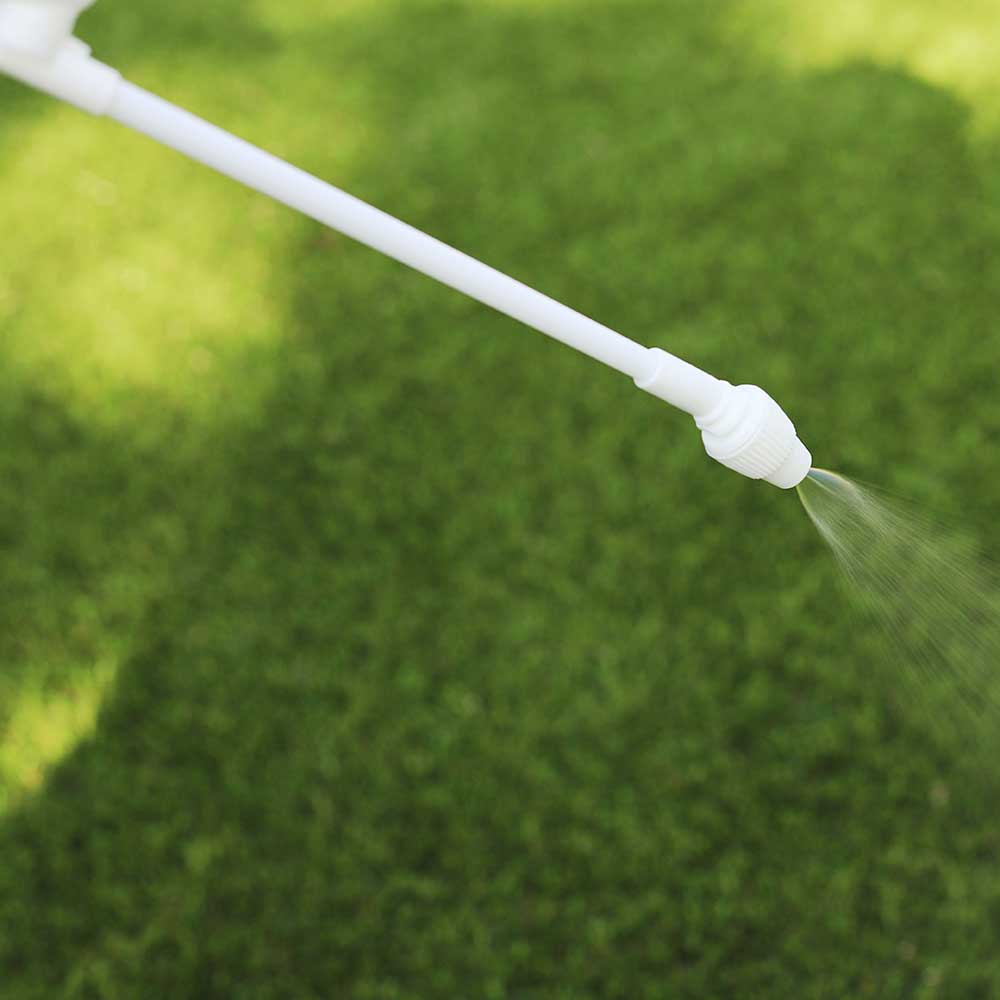
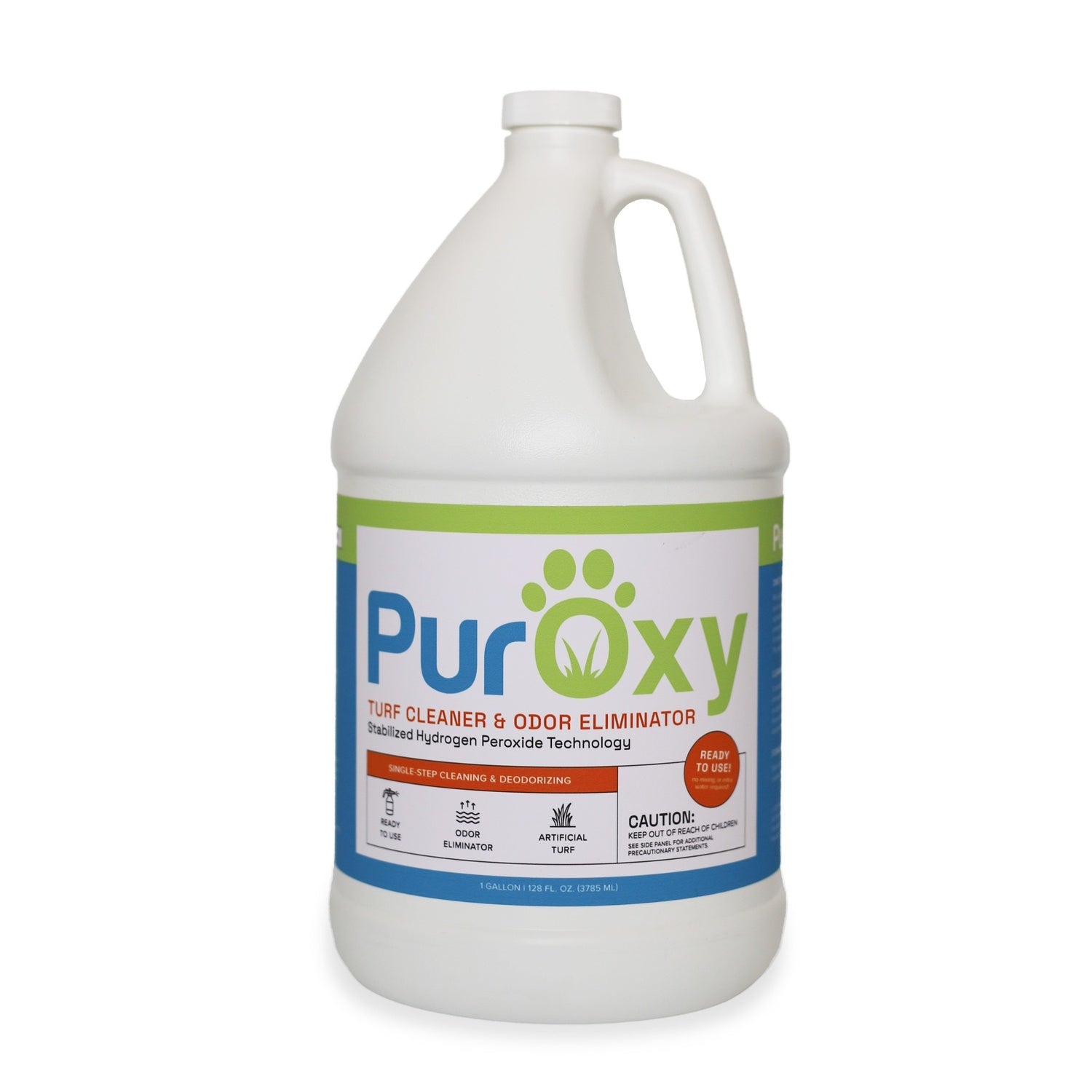
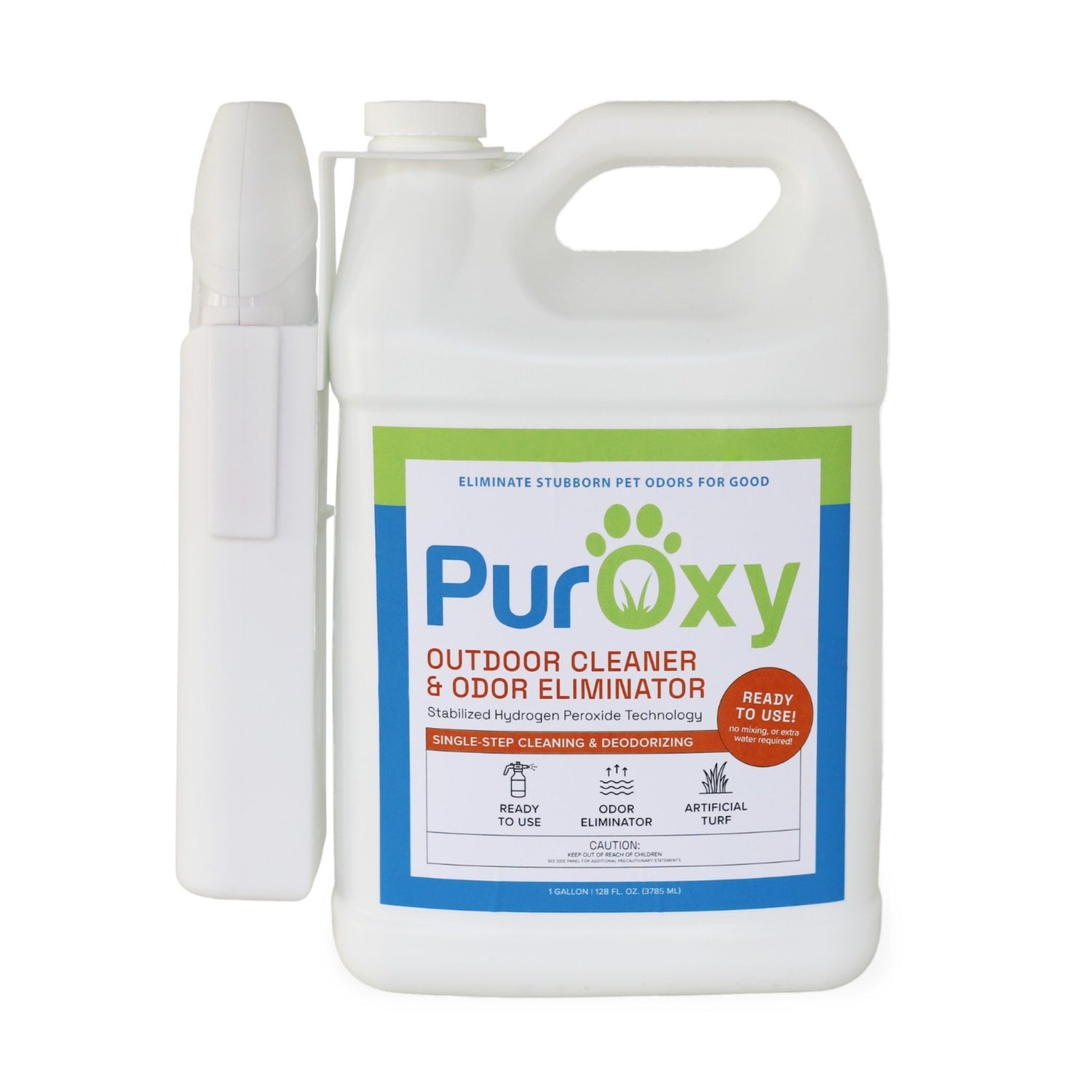
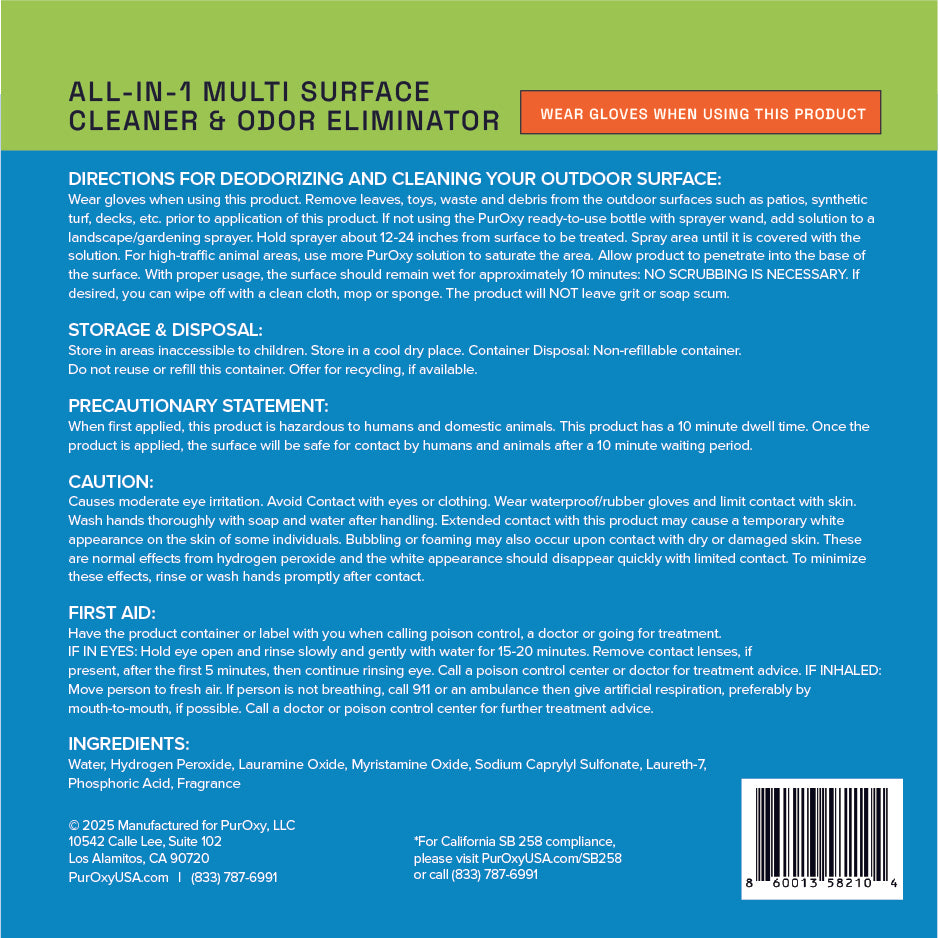
Spray PurOxy liberally over the entire area. Soak both the grass fibers and the infill — the formula needs to reach the layers where crystals hide.
Step 3: Wait the Full 10 Minutes
Give PurOxy the full contact time. This is when oxidation breaks down odor-causing compounds at the molecular level. Don't rinse or disturb the area yet.
Step 4: Rinse Thoroughly
Once the contact time is up, rinse with clean water to wash away the oxidized compounds and any leftover product. The biodegradable formula won't harm your turf or surrounding plants.
Step 5: Check for Missed Spots
Once everything dries, do a smell test. Treat any remaining problem spots with a second round.
For comprehensive maintenance beyond odor control, check out our complete artificial turf maintenance guide for seasonal care recommendations.
Prevention Routine to Stop Odors from Returning
Preventing odor buildup works far better than fighting established crystal deposits. A consistent routine keeps your turf fresh and extends its lifespan.
Weekly Maintenance
Apply PurOxy to high-traffic pet areas once a week, even with no detectable odor. Regular treatment stops crystals from accumulating in the infill.
After Heavy Rain
Treat previously contaminated areas after big storms. This stops reactivated crystals from releasing odor before they stink up your yard.
During Hot Spells
Increase treatment to twice weekly in problem areas once temperatures climb above 90°F. Extreme heat speeds up crystal formation and demands more frequent prevention.
Quarterly Deep Clean
Run the full deep-clean process above on your entire turf system every three months. This catches anything you missed and keeps everything fresh.
Consistency is what makes prevention work. Regular treatment with an effective oxidizing cleaner stops small problems from becoming major odor disasters that need intensive remediation.
FAQs
Why does my turf smell after it rains?
Rain reactivates dormant uric acid crystals in the infill. As water evaporates after the rain stops, those crystals release concentrated odor into the air — which is why turf often smells worst on the first sunny day after rain.
Why does my artificial grass smell worse after cleaning?
Traditional cleaning can't dissolve uric acid crystals, so they stay active. Cleaning water can also spread crystals to previously clean areas and reactivate dormant deposits, widening the smell beyond its original spot.
Can I use bleach on artificial turf?
No. Bleach can damage turf fibers and backing, potentially voiding your warranty. It also doesn't break down uric acid crystals and can create harmful reactions when mixed with ammonia compounds in pet urine.
How do I deep clean artificial turf that smells?
Use an oxidizing cleaner like PurOxy that breaks down odor-causing compounds at the molecular level. Apply liberally, give it 10 minutes of contact time, then rinse thoroughly. Repeat on any remaining problem areas.
Will the smell eventually go away on its own?
No — uric acid crystals stay active for months or years without treatment. The smell usually gets worse over time as more crystals accumulate, rather than fading naturally.
How often should I treat my artificial turf for pet odors?
Treat high-traffic pet areas weekly with an oxidizing cleaner. Increase frequency during hot weather or after heavy rain. Active odor issues may need daily treatment until they're under control.
Conclusion
Chronic turf odor comes from uric acid crystals that conventional cleaning can't eliminate. These crystals embed deep in the infill and reactivate under the right conditions, driving the frustrating cycle of cleaning and re-contamination.
The fix is molecular-level oxidation that fully breaks down odor-causing compounds. With the right approach and consistent maintenance, you can eliminate existing odors and stop new ones from forming.
Ready to solve your turf odor problem for good? Browse our full range of oxidizing cleaners and maintenance products at puroxyusa.com/pages/shop-all and start enjoying fresh, odor-free turf year-round.
Learn more about PurOxy's stabilized hydrogen peroxide technology.
Michael Maxwell is the COO of PurOxy and brings over a decade of experience in retail and consumer sales. He oversees product development and go-to-market strategy for PurOxy's line of pet-safe outdoor cleaners, including the 2025 Pet Innovation Award-winning PurOxy Outdoor Cleaner.