Table of Contents
- Why Your Artificial Turf Needs Regular Care
- Your Simple Maintenance Schedule
- Dealing with Pet Urine and Odors
- Essential Tools You'll Need
- Common Mistakes to Avoid
- FAQs
- Keep Your Yard Fresh and Clean
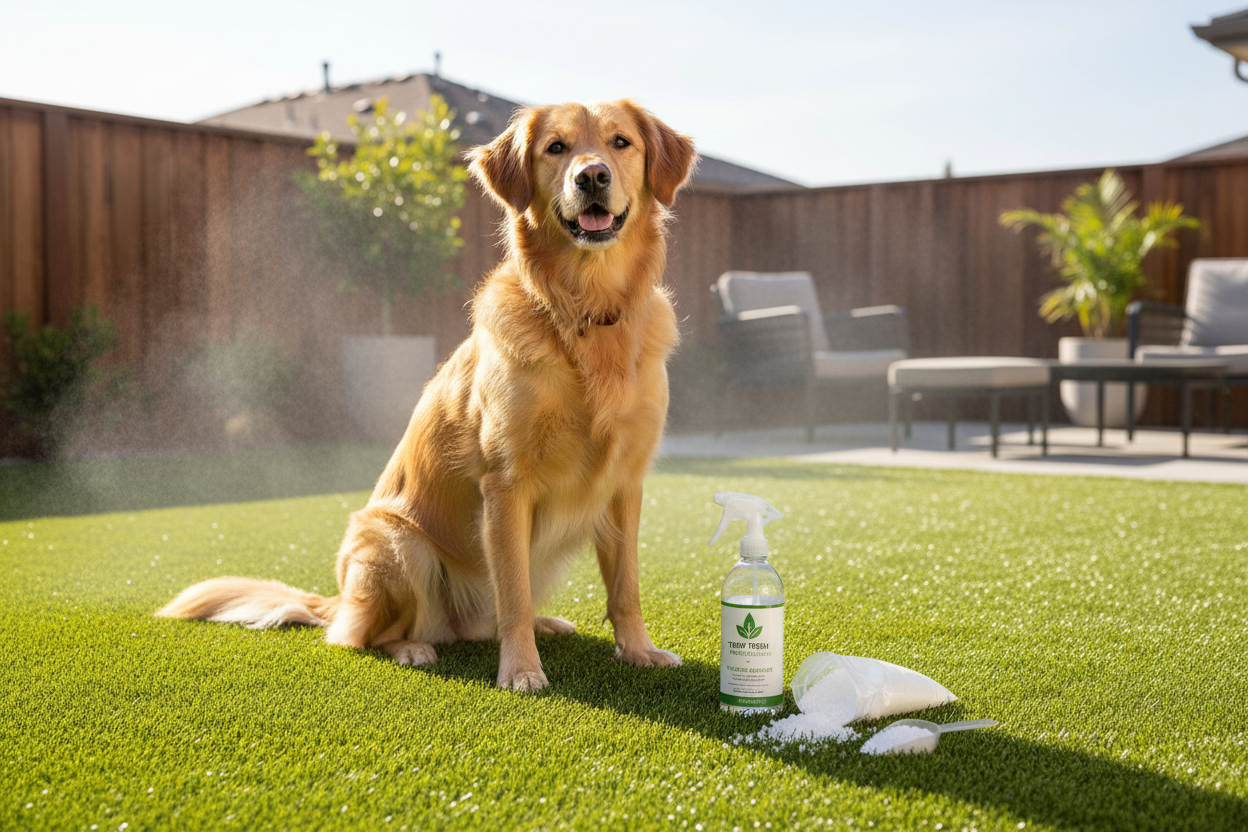
You're hosting a backyard barbecue when your neighbor's kid wrinkles their nose and asks, "What's that smell?" Your heart sinks. You installed artificial turf to skip the hassles of real grass, but somehow your yard has picked up that unmistakable pet odor that intensifies in the heat.
More dog owners face this situation than you might expect. They pick artificial turf for its durability and low maintenance, then discover that "low maintenance" doesn't mean "zero maintenance" — particularly when pets are involved.
The good news? Keeping your artificial turf clean, fresh, and odor-free doesn't require complicated procedures. The right approach and schedule will maintain a beautiful yard that's safe for your family and pets while lasting for years.
Why Your Artificial Turf Needs Regular Care
Artificial turf beats natural grass for durability. No watering, fertilizing, or mowing required. But it still needs attention, particularly with dogs in the picture.
Pet urine doesn't vanish on its own. It seeps into the backing and infill materials, where bacteria multiply and create stubborn odors. Without regular cleaning, these smells build up and become tougher to tackle. Once odors set in deep, you're looking at a much bigger headache.
Regular maintenance stops this cycle before it starts. Your turf stays fresh, looks better, and lasts longer. Plus, spending a few minutes each day beats dealing with expensive professional cleaning or having to replace your turf early.
Your Simple Maintenance Schedule
Daily Tasks (2 Minutes)
Pick up solid waste right away. The moment you see pet waste, grab it. Letting it sit just creates stains and smell problems you don't want to deal with later.
Quick visual check. Scan for debris, leaves, or toys that have accumulated. Remove them by hand or with a leaf blower.
Hose down high-traffic areas. If your dog has favorite bathroom spots, give those areas a quick rinse with your garden hose.
Weekly Care (15 Minutes)
Brush or rake the turf. Use a stiff brush or plastic rake to lift the fibers and redistribute infill material. This prevents matting and keeps your turf looking natural.
Rinse thoroughly. Give the entire area a good rinse with your hose. This removes dust, pollen, and light debris while refreshing the surface.
Check drainage. Make sure water drains properly. Poor drainage leads to standing water and odor problems.
Monthly Deep Clean (30 Minutes)
Power wash if needed. Use a pressure washer on a low setting to remove stubborn dirt and debris. Keep the nozzle at least 12 inches from the surface.
Apply cleaning solution. Use a specialized cleaner designed for artificial turf, especially in areas where your pets spend time.
Inspect for damage. Look for loose seams, worn areas, or infill that needs replenishing. Fix small issues before they become major problems.
Seasonal Maintenance
Spring: Clear winter debris and check for damage from freeze-thaw cycles. Replenish infill material in worn spots.
Summer: Hot weather makes odors worse, so clean more often. A daily rinse during heat waves really helps keep things fresh.
Fall: Remove leaves promptly to prevent staining and mold growth. Keep gutters clean so they don't overflow onto your turf.
Winter: Use a plastic shovel or broom to brush off snow. Avoid salt or ice melt products that can damage the fibers.
Dealing with Pet Urine and Odors
Here's where most pet owners hit a wall. Regular household cleaners just mask the smell temporarily - they don't actually eliminate what's causing it.
Enzyme cleaners seem like the obvious choice since they break down organic compounds in urine. But here's the thing: artificial turf creates a tricky environment for enzymes. The synthetic fibers and backing don't give enzymes the conditions they need to work consistently. For a deeper look at why turf odors develop and what causes them to return, see our guide on does artificial turf smell and how to fix it.
That's where oxidation comes in. Instead of relying on biological processes that might work or might not, oxidation-based cleaners go straight after the odor molecules. They work faster and handle synthetic materials much better. We break down exactly why in our hydrogen peroxide vs enzyme cleaners comparison.
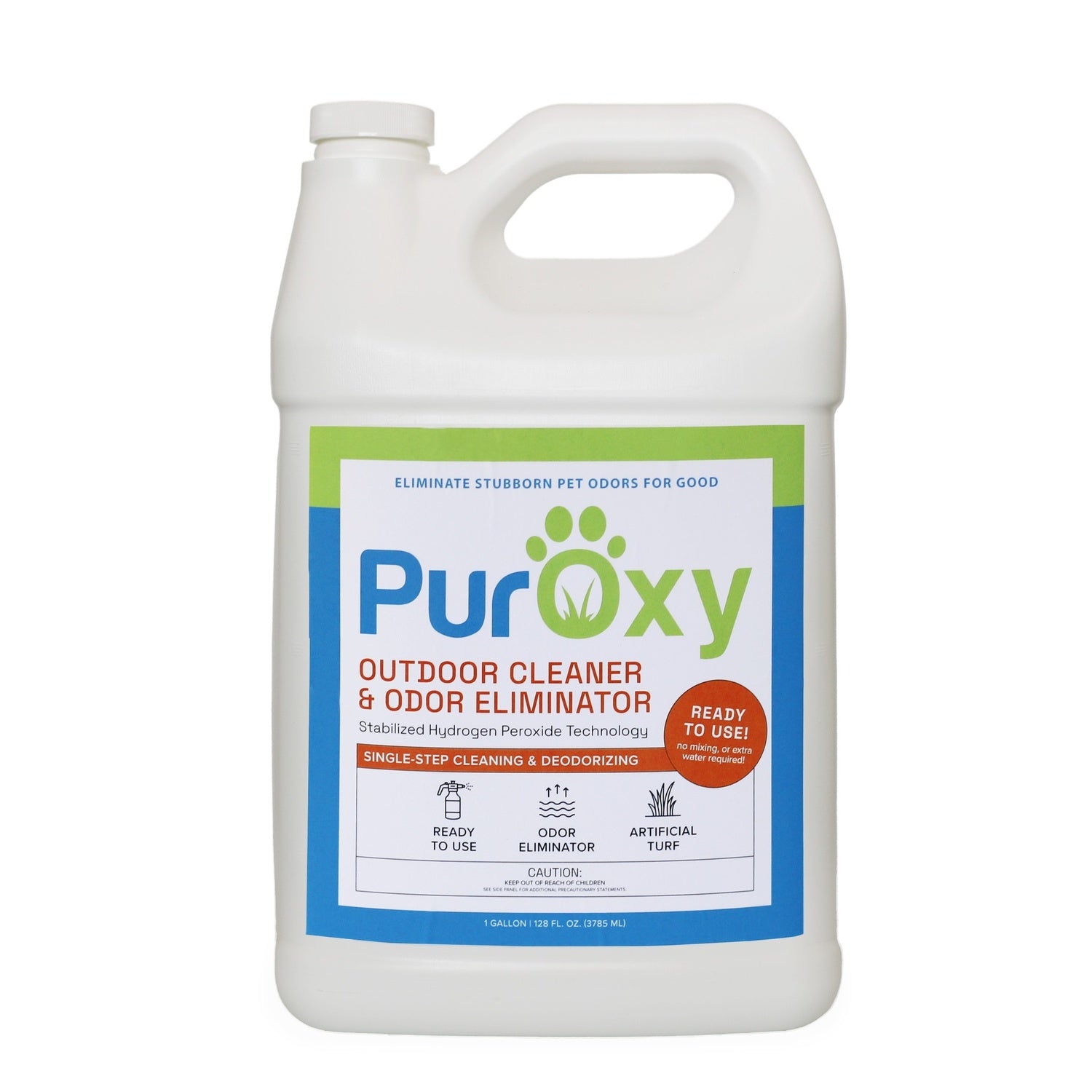
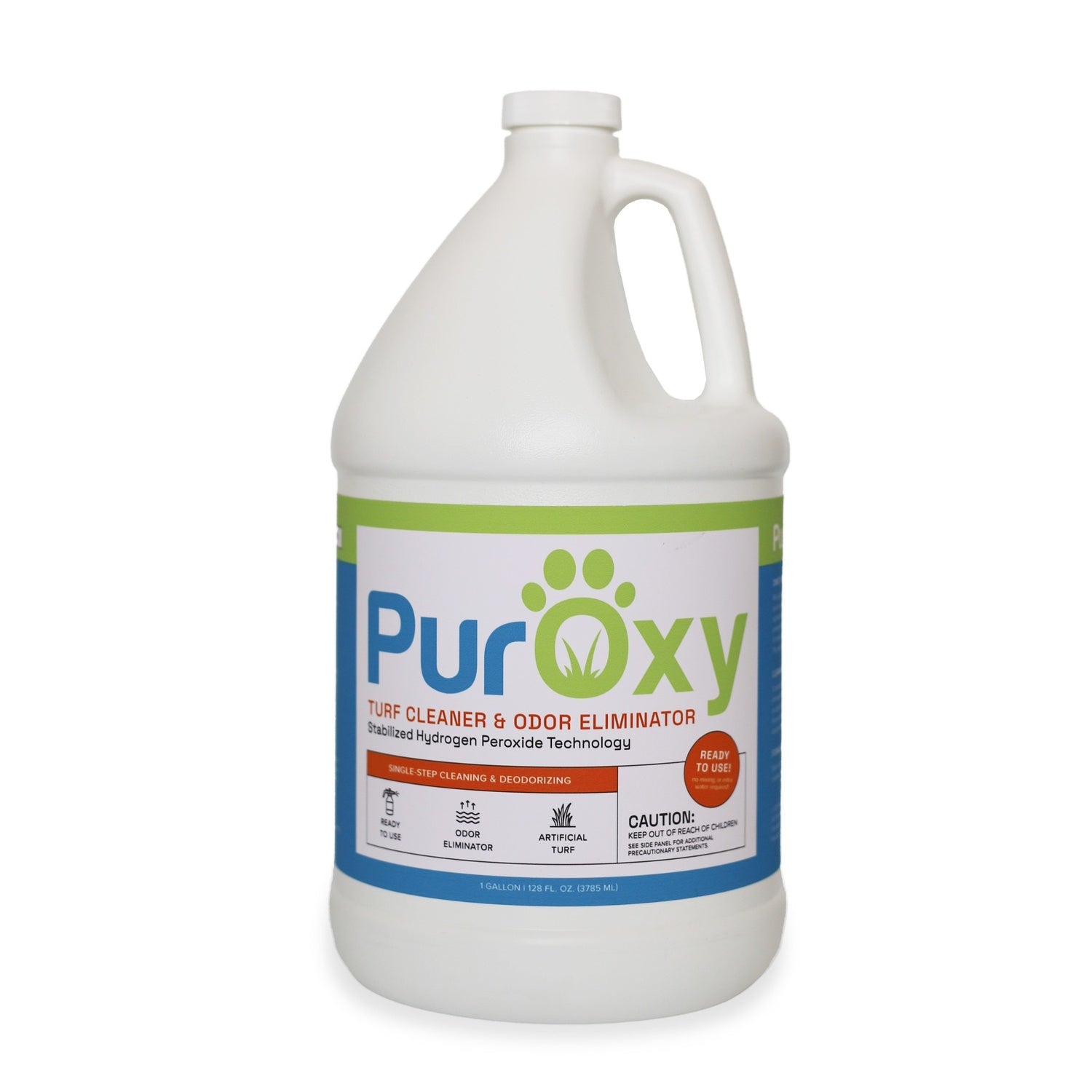
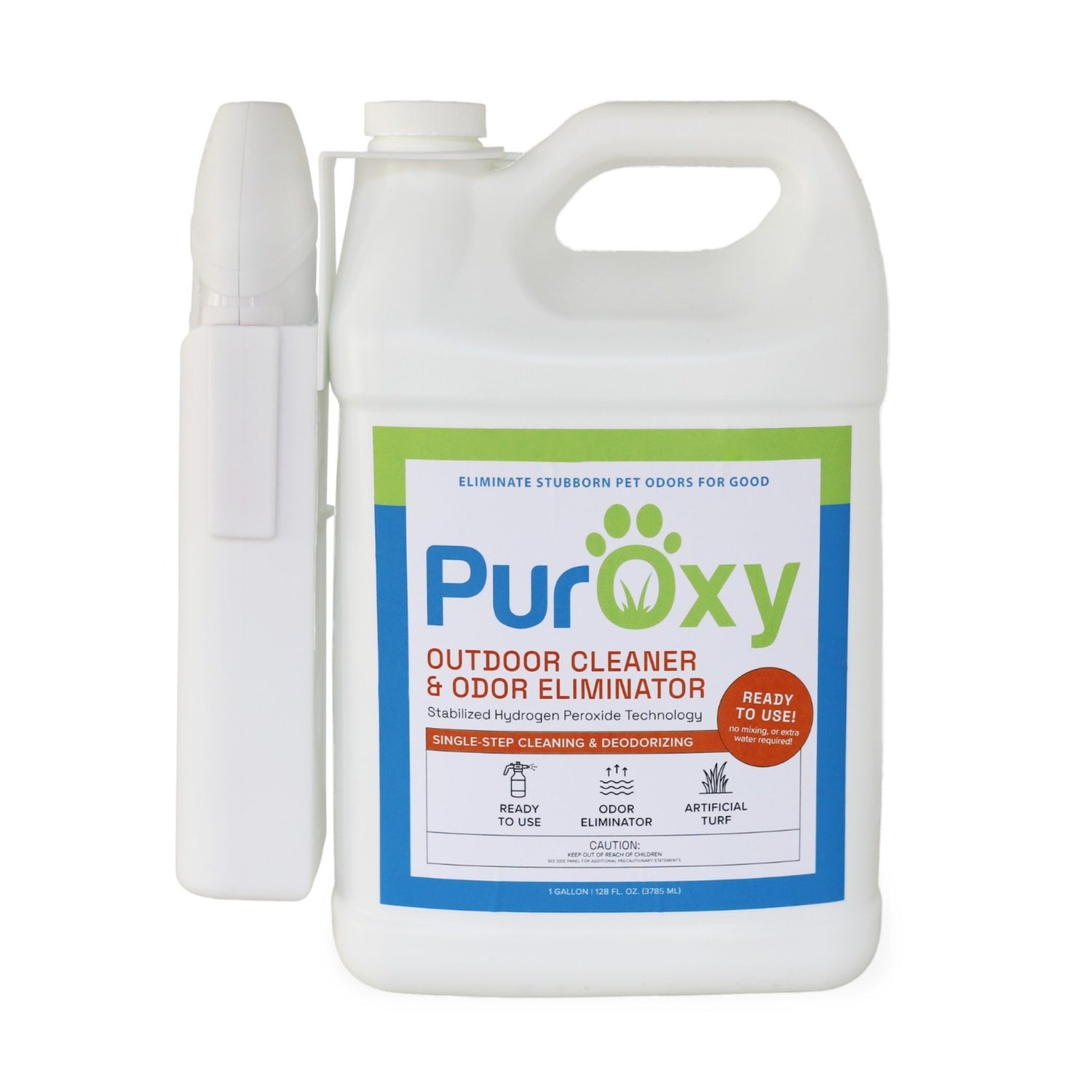
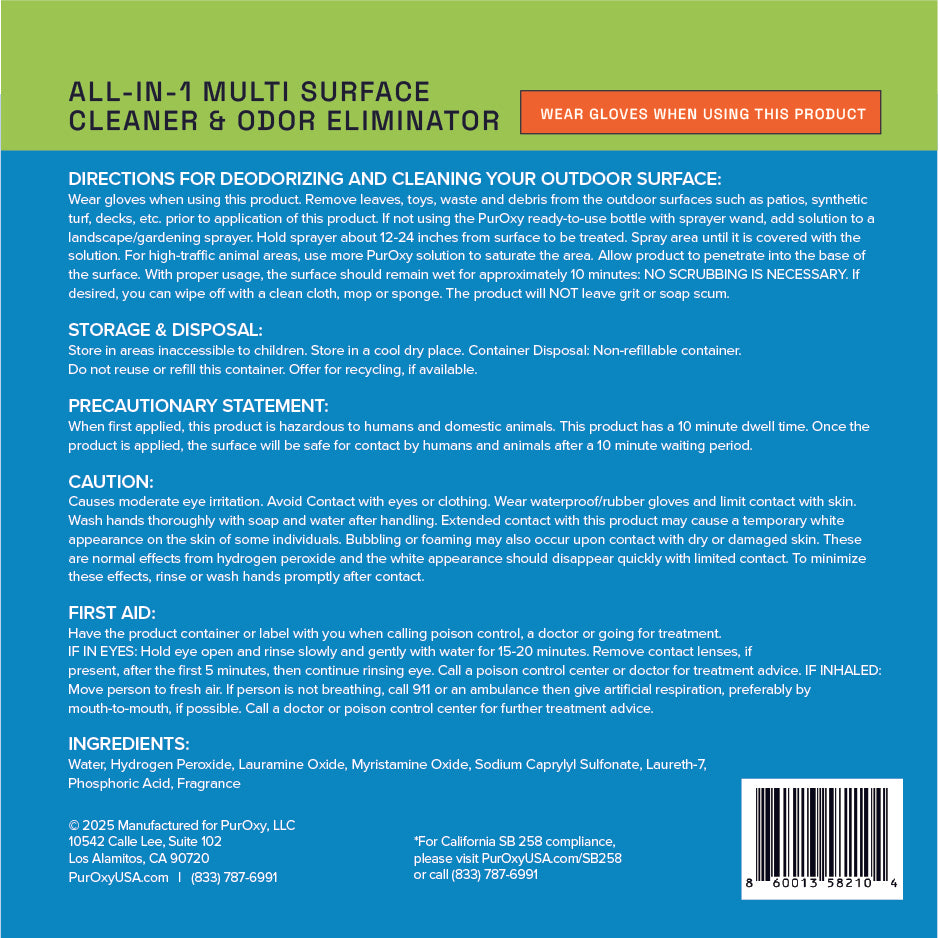
PurOxy uses stabilized hydrogen peroxide technology that gets to the root of pet odors and stains. No mixing, no prep work - just spray it on the problem area, wait 10 minutes, and you're done. Since it's biodegradable and doesn't contain bleach or phosphates, you can use it daily without worrying about your kids or pets.
For pet owners curious about why oxidation outperforms enzymes on artificial surfaces, you can learn more about the chemistry at puroxyusa.com/the-science.
Pro tip: Don't wait for odors to develop. Regular treatment of your pet's favorite spots prevents buildup and keeps your yard consistently fresh.
Essential Tools You'll Need
Maintaining artificial turf doesn't require an arsenal of expensive equipment. Here's your basic toolkit:
For daily maintenance:
- Garden hose with spray nozzle
- Pooper scooper or waste bags
- Leaf blower (optional but helpful)
For weekly care:
- Stiff-bristled brush or plastic rake
- Bucket for mixing cleaning solutions
For monthly deep cleaning:
- Pressure washer (optional)
- Specialized artificial turf cleaner
- Soft-bristled brush for scrubbing
For seasonal tasks:
- Plastic snow shovel
- Infill material for touch-ups
- Seam repair kit
Most of these items are probably already in your garage. Consistency matters more than having fancy equipment.
Common Mistakes to Avoid
Using harsh chemicals. Bleach, ammonia, and other aggressive chemicals damage artificial turf fibers and backing. Stick with cleaners made for synthetic surfaces.
Ignoring drainage problems. Poor drainage means standing water, which becomes a breeding ground for bacteria and mold. Fix drainage issues right away.
Leaving pet waste too long. The longer waste sits on your turf, the tougher it gets to clean completely. Remove solid waste daily and treat urine spots quickly.
Using metal tools. Metal rakes, shovels, or brushes can damage turf fibers. Always use plastic or soft-bristled tools.
Overwatering. While regular rinsing helps, excessive water can overwhelm drainage systems and create moisture problems.
Skipping regular maintenance. Small issues become big problems when ignored. A few minutes of daily care prevents hours of deep cleaning later.
Using the wrong pressure washer setting. High pressure can damage fibers and backing. Start low and keep that nozzle moving.
Get into good maintenance habits early, and your turf will reward you with years of fresh, attractive outdoor space. Artificial turf is a solid investment in your property and your family's outdoor enjoyment. Taking care of it properly protects that investment while keeping everyone safe and comfortable.
FAQs
How often should I clean artificial turf with dogs?
Pick up waste daily and rinse busy areas weekly. Use a specialized cleaner like PurOxy monthly or whenever odors pop up. Summer heat means you'll need to clean more often.
Can I use a pressure washer on artificial turf?
Yes, but be careful. Start with the lowest setting and keep at least 12 inches between the nozzle and turf. Keep it moving to avoid damage.
What is the best cleaner for artificial turf pet urine?
Oxidation-based cleaners handle synthetic surfaces best. PurOxy's stabilized hydrogen peroxide formula tackles odors at the molecular level without harsh chemicals, so it's perfect for regular use around pets and kids.
Does artificial turf need to be replaced if it smells?
Usually not. Persistent smells typically mean you need better cleaning, not new turf. Give problem areas a thorough cleaning with the right product and stick to a regular schedule. Most odor issues clear up without replacement.
How long does artificial turf last with proper maintenance?
Good artificial turf can go 15-20 years with proper care. Regular cleaning, quick waste removal, and fixing small problems fast will maximize your turf's life and keep it looking great.
Keep Your Yard Fresh and Clean
Artificial turf maintenance doesn't have to take over your weekends. The right approach and products keep your yard looking and smelling great year-round without much fuss.
Stay consistent with your routine - that's what really matters. A few minutes of daily attention prevents big problems and keeps your outdoor space enjoyable for everyone.
Ready to tackle pet odors and keep your artificial turf in perfect condition? Explore PurOxy's complete line of outdoor cleaning solutions at puroxyusa.com/pages/shop-all.