PurOxy vs. TurFresh: Which Turf Cleaner Works Better?
- Table of Contents
- The chemistry gap between oxidizing and enzyme-based cleaners
- How TurFresh BioS+ works
- How PurOxy works
- Where enzyme cleaners fall short outdoors
- Side-by-side comparison
- Which one is actually better for dog owners?
- FAQs
You've probably stood in your backyard, nose wrinkling, wondering why your artificial turf still smells like a kennel even after cleaning it. If you've been searching for the best turf cleaner for dog urine, two names keep coming up: PurOxy and TurFresh. Both claim to eliminate pet odors from synthetic grass. Both work through completely different mechanisms. That difference matters more than most product comparisons let on.
Here's exactly how each product works, where each one struggles, and which one is the right tool for a dog owner who needs reliable results.
Table of Contents
- The chemistry gap between oxidizing and enzyme-based cleaners
- How TurFresh BioS+ works
- How PurOxy works
- Where enzyme cleaners fall short outdoors
- Side-by-side comparison
- Which one is actually better for dog owners?
- FAQs
The chemistry gap between oxidizing and enzyme-based cleaners
Before comparing labels, you need to understand what's actually causing the smell. Dog urine contains uric acid crystals, ammonia compounds, and proteins. When urine dries into turf fibers and infill, bacteria break those compounds down further, producing mercaptans and other volatile compounds. That's the sharp, persistent odor that gets worse on hot days.
Two main approaches attack this problem chemically.
The first is oxidation. An oxidizing agent like hydrogen peroxide releases oxygen molecules that break apart the chemical bonds holding odor compounds together. It doesn't mask the smell. It destroys the compounds producing it.
The second is biological digestion. Enzyme cleaners use live bacteria cultures that produce enzymes to digest organic material, including ammonia and proteins. The bacteria essentially eat the odor source over time.
Both approaches can work. The question is how reliably they work outdoors, on artificial turf, in real weather conditions.
How TurFresh BioS+ works
TurFresh's primary consumer product is the BioS+, a bio-enzymatic cleaner. The active mechanism is biological: the bacteria in the formula need time, moisture, and a stable temperature range to produce enzymes and digest the odor-causing compounds.
That works reasonably well in controlled conditions. Indoors, at room temperature, with consistent moisture, enzyme cleaners can be effective.
Outdoors is a different environment entirely. UV exposure degrades live bacteria cultures. Heat above roughly 85°F can kill or slow the organisms. Cold below 50°F slows enzymatic activity significantly. Rain can dilute the formula before it has time to work. Direct sun on turf can push surface temperatures well above air temperature.
The result is inconsistent performance. Apply BioS+ on a mild, overcast day and you might get solid results. Apply it the following week during a heat wave, and the same bacteria may not survive long enough to finish the job. The smell comes back, and you're left guessing why.
TurFresh also makes a separate product called BioX, which uses oxygenated technology rather than enzymes. BioX is aimed primarily at professional landscapers and requires dilution before use. It's a different product category from BioS+, so this comparison focuses on BioS+ since that's what most residential dog owners are actually buying.
How PurOxy works
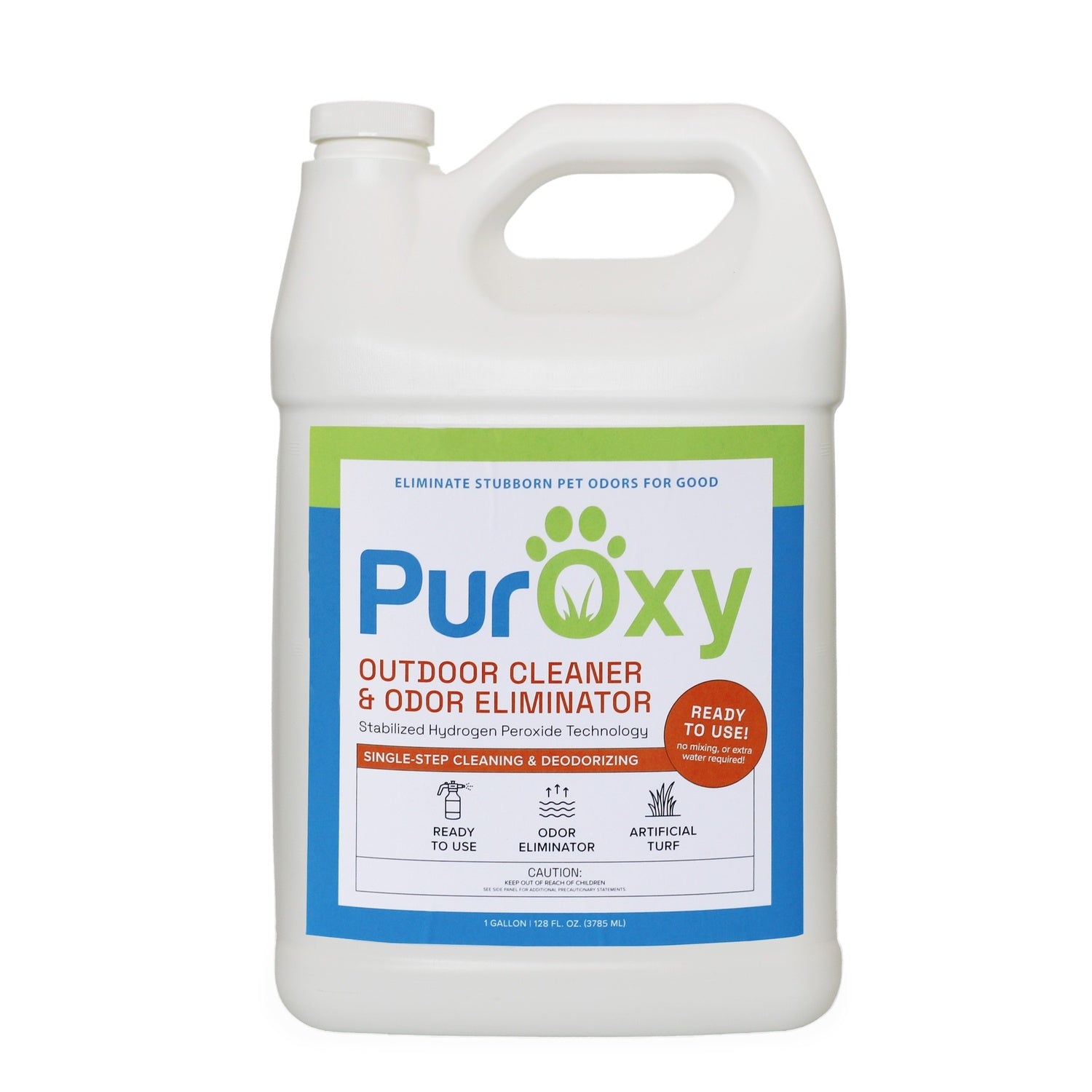
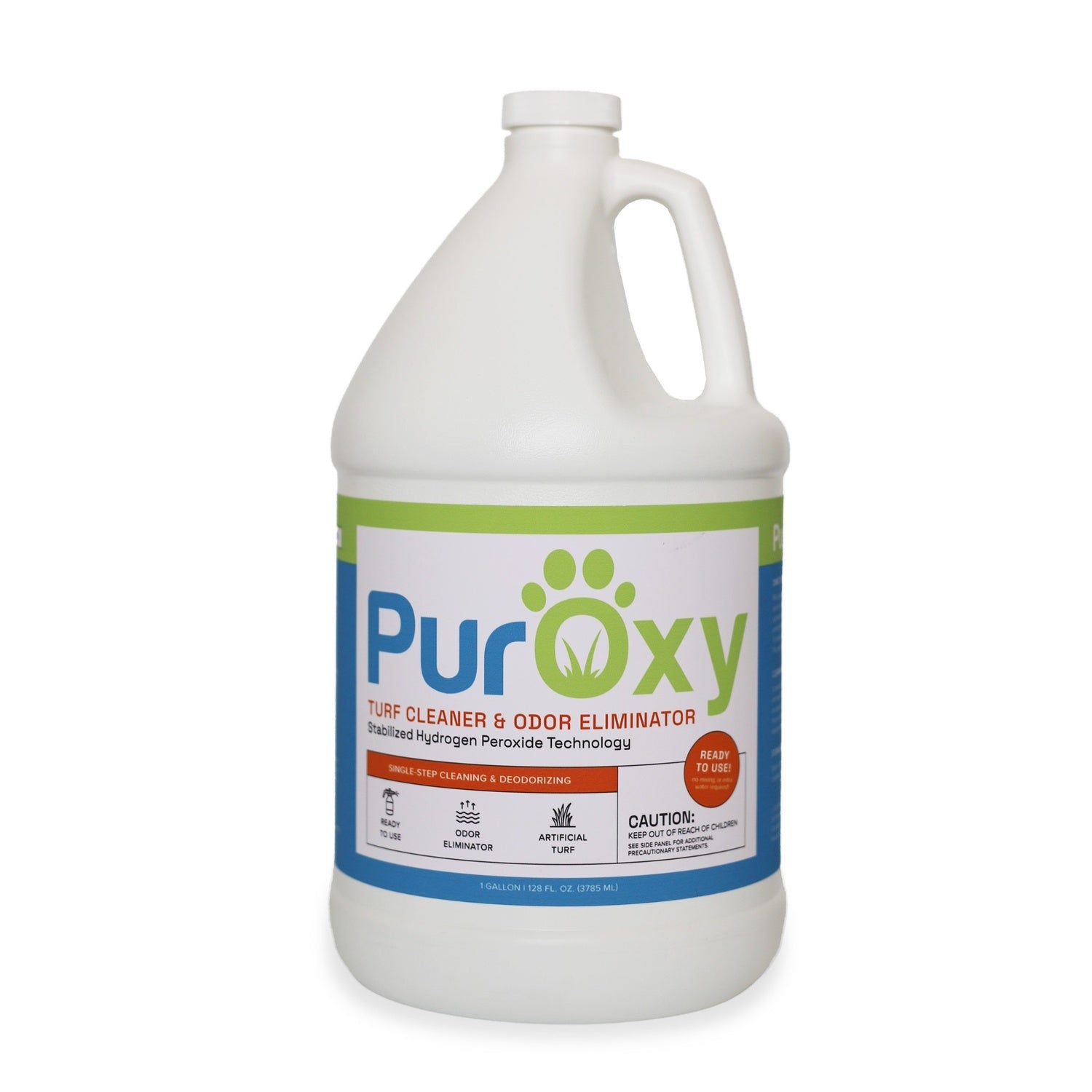
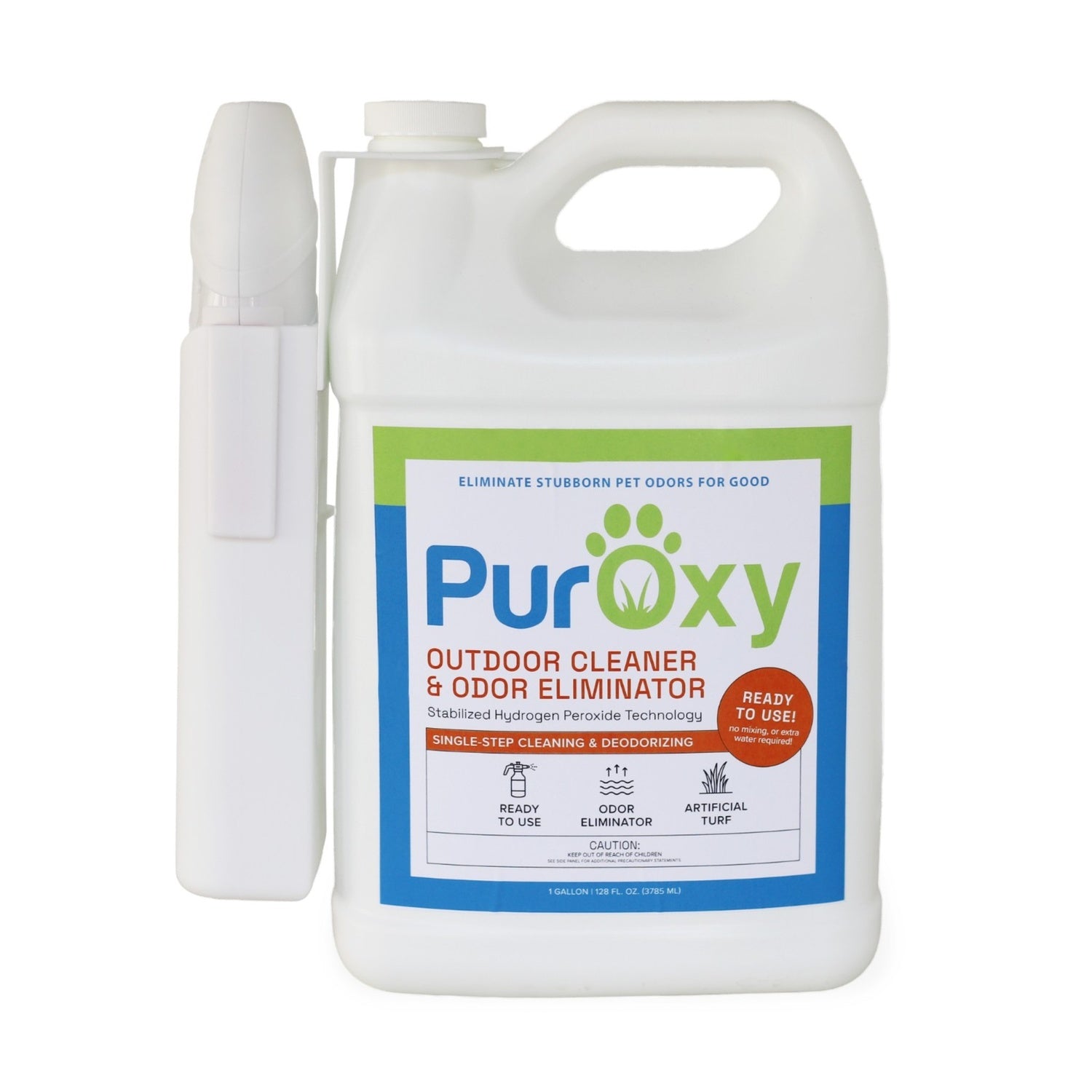
PurOxy uses stabilized hydrogen peroxide as its active ingredient. Stabilized means the H₂O₂ is formulated to stay active on the surface long enough to do its job, rather than breaking down immediately on contact with air or organic matter the way standard drugstore hydrogen peroxide does.
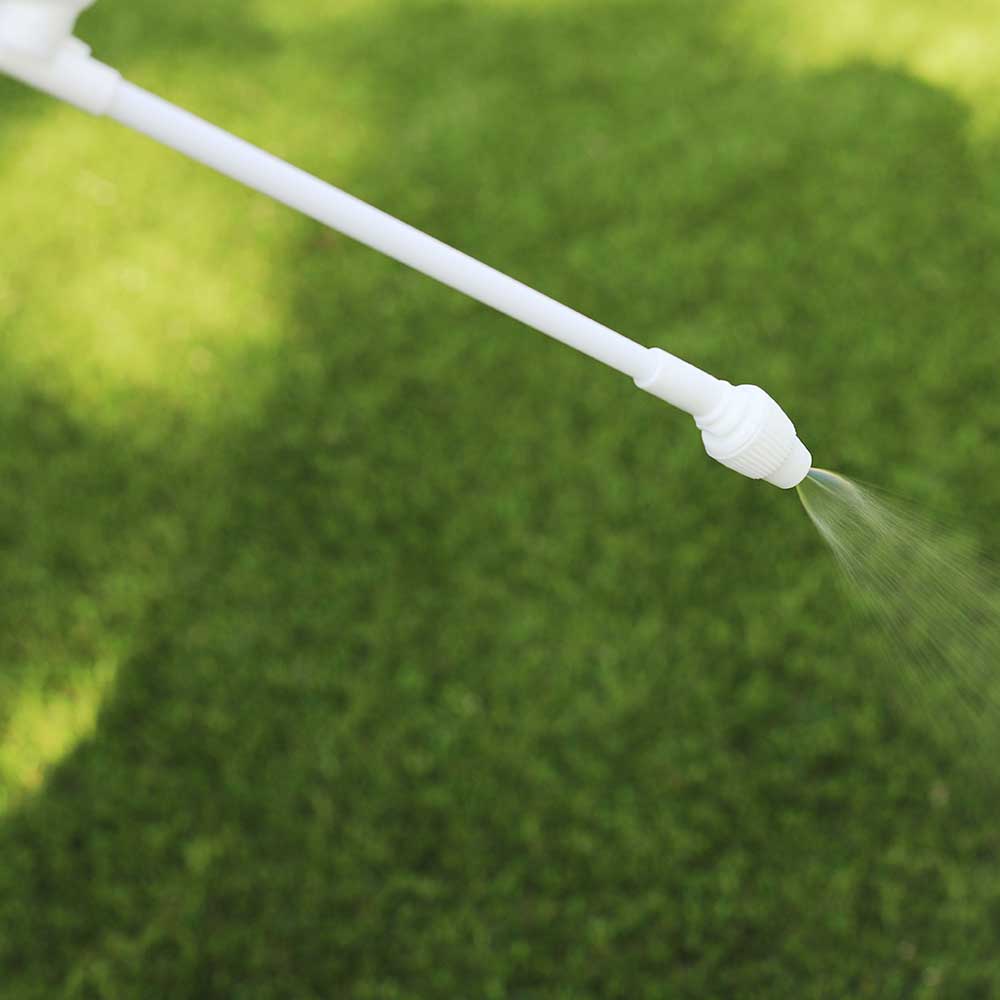
When you spray PurOxy onto turf, the hydrogen peroxide releases oxygen that oxidizes uric acid crystals, ammonia compounds, and the bacteria producing the odor. It works on contact. There's no waiting for organisms to multiply and digest anything. The reaction starts immediately and completes in under 10 minutes.
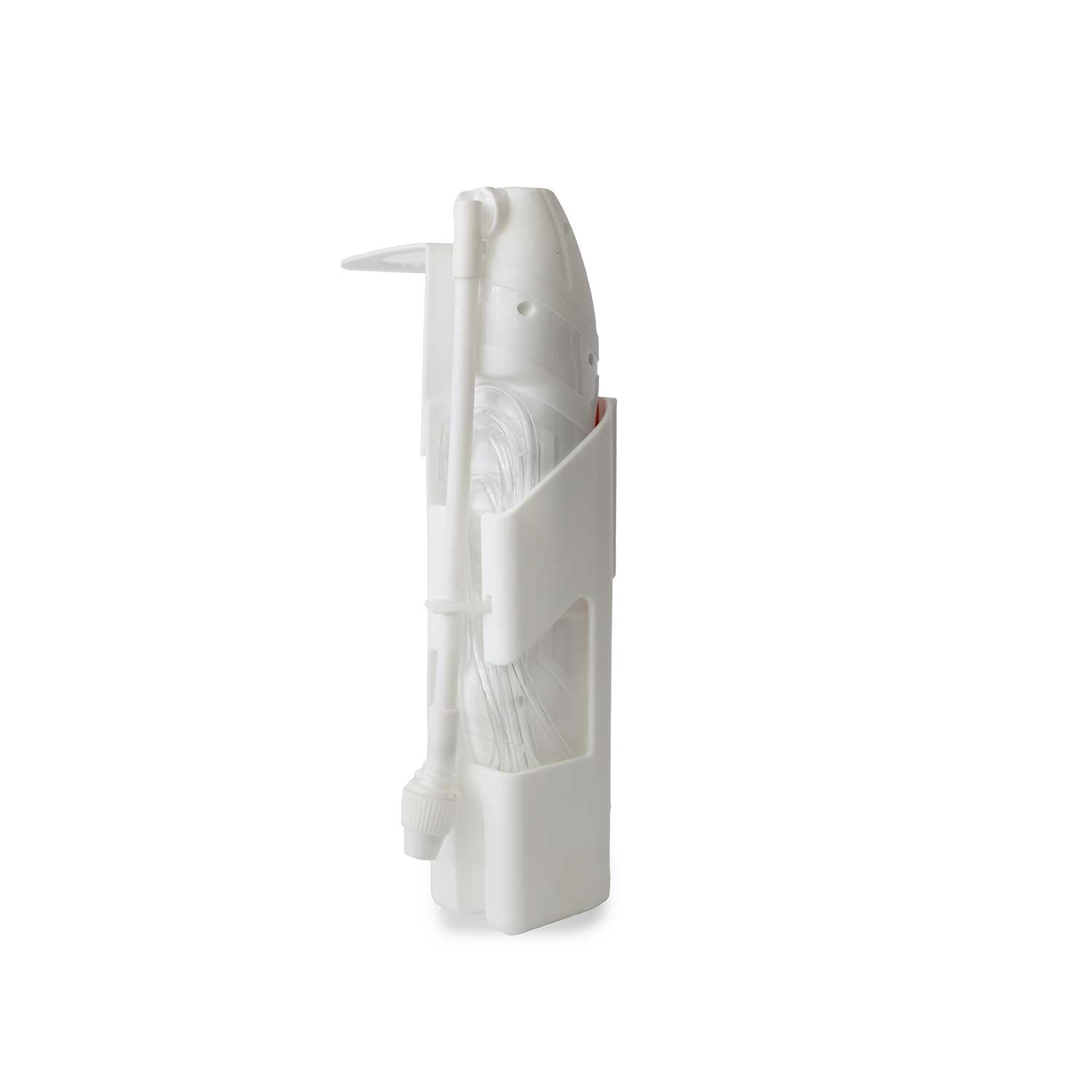
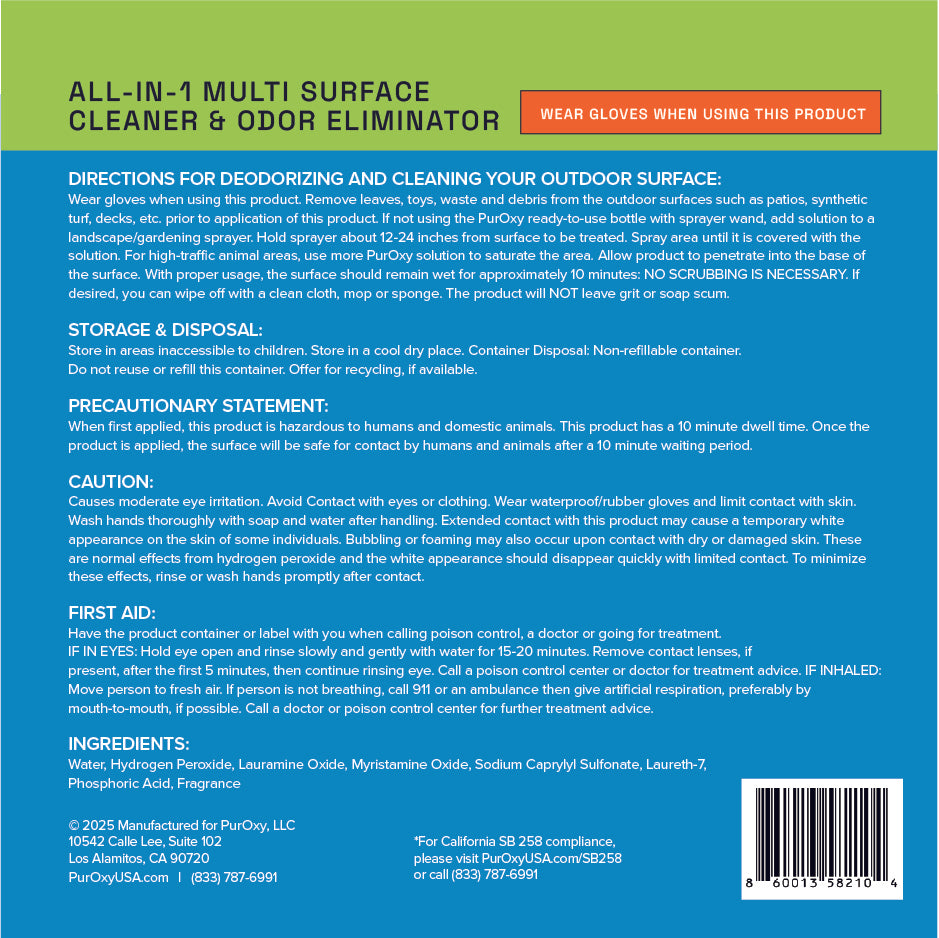
PurOxy contains no bleach and no phosphates. The formula is biodegradable and safe around children and pets once dry. It's ready to use straight from the bottle with no dilution, no mixing, and no pre-cleaning required. You spray it on, let it work, and you're done.
That simplicity has a practical benefit beyond convenience. Enzyme cleaners require correct application, the right dwell time, a moist surface, and cooperative weather. PurOxy removes most of those variables from the equation.
Where enzyme cleaners fall short outdoors
The core problem with enzyme-based cleaners on artificial turf isn't that they're bad products. It's that the biology they depend on is fragile in outdoor conditions.
Artificial turf in direct sun can reach surface temperatures of 130°F to 150°F on a hot day. Bacteria don't survive that. Even at lower temperatures, UV radiation degrades live cultures before they finish working. Rain or irrigation after application dilutes the formula before the enzymes have done their job.
Enzyme cleaners also need time. Most instructions call for 10 to 30 minutes of dwell time, sometimes longer for heavy odor. That's manageable on bathroom tile. On a turf surface heating up in the sun with a dog running across it, consistent dwell time is hard to guarantee.
Many pet owners using enzyme-based products find the odor returns within a few days. The product didn't fail completely. It just didn't finish the job under the conditions it was applied in.
Side-by-side comparison
| PurOxy | TurFresh BioS+ | |
|---|---|---|
| Active ingredient | Stabilized hydrogen peroxide | Bio-enzymatic (live bacteria cultures) |
| Dilution required | No, ready to use | No |
| Dwell time | Under 10 minutes | 10-30+ minutes |
| Surfaces | Artificial turf, patios, pee pads | Artificial turf |
| Scent options | Unscented / light formula | Scented options available |
| Price point | $49.95 | Check current pricing on TurFresh site |
Which one is actually better for dog owners?
If you're cleaning artificial turf regularly, in a real outdoor environment, with a dog that uses the same spots repeatedly, the oxidation approach is more reliable. Weather doesn't degrade hydrogen peroxide the way it degrades live bacteria cultures. You don't need to time your application around temperature or UV exposure. The reaction happens on contact.
Enzyme cleaners work best in controlled, indoor conditions. Outdoors, too many variables can interrupt the biological process before it completes. That's not a knock on the science. It's just the wrong tool for the environment.
PurOxy was built specifically for outdoor surfaces. The stabilized formula, the no-dilution application, the under-10-minute contact time, the biodegradable chemistry safe for kids and pets once dry -- all of it is designed around how people actually clean a backyard. You don't have to think about whether today's weather is right for it to work.
If you're dealing with persistent dog urine odor on artificial turf and enzyme cleaners have left you frustrated, PurOxy is the right tool. Learn more at puroxyusa.com.
FAQs
Is hydrogen peroxide an enzyme cleaner? No. Hydrogen peroxide is an oxidizing agent, not an enzyme cleaner. Enzyme cleaners use live bacteria to digest organic compounds biologically over time. Hydrogen peroxide releases oxygen that breaks apart odor-causing compounds on contact. They're different mechanisms, and they perform differently outdoors.
Is PurOxy safe for pets and kids? Yes. PurOxy contains no bleach and no phosphates. It's biodegradable and safe for children and pets once the surface is dry. You don't need to keep animals off the turf for extended periods after application.
Why does my turf still smell after using an enzyme cleaner? Enzyme cleaners depend on live bacteria that heat, UV exposure, or rain can kill or slow before they finish the job. If your turf is in direct sun or temperatures are high, the bacteria may not survive long enough to fully digest the odor compounds. The smell comes back because the process was interrupted, not completed.
Does PurOxy work on surfaces other than artificial turf? Yes. PurOxy works on patios, decks, and pee pads. It eliminates pet odors from any outdoor surface the formula can reach, and it extends the life of pee pads by cleaning and deodorizing them rather than masking the smell.
How often should I use PurOxy on artificial turf? PurOxy is safe for daily use. For most households with dogs, applying it after heavy use or visible accidents and doing a thorough application once or twice a week is enough to stay ahead of odor buildup.
What's the difference between TurFresh BioS+ and TurFresh BioX? BioS+ is TurFresh's bio-enzymatic consumer product. BioX is a separate oxygenated-technology product aimed at professional landscapers that requires dilution before use. They're different products with different intended users. Most residential pet owners are using BioS+.
Does PurOxy need to be rinsed off after application? No. Spray it on, let it work for under 10 minutes, and you're done. No pre-cleaning, no mixing, no post-rinse required.