If your backyard smells like a dog park every time the sun comes out, you are not alone. Pet urine odor on artificial turf is one of the most common complaints among dog owners who made the switch from natural grass — and it is one of the most misunderstood cleaning problems in outdoor maintenance.
The good news: it is completely fixable. But only if you understand why it happens and use the right approach to eliminate it at the source.
Why Artificial Turf Smells Like Dog Urine (And Why It Gets Worse Over Time)
Natural grass has soil bacteria that break down organic waste over time. Artificial turf does not. When your dog urinates on synthetic grass, the urine seeps through the blades and settles into the infill material — the crumb rubber, sand, or zeolite that sits beneath the fibers.
Once there, urine does not evaporate cleanly. Instead:
- Uric acid crystals form in the infill and bind tightly to the material. These crystals are not water-soluble, meaning a simple rinse with a garden hose does not remove them.
- Bacteria multiply in the warm, damp infill, breaking down urea into ammonia — which is the sharp, eye-watering smell you notice on hot days.
- Heat amplifies everything. On a sunny afternoon, your turf surface can reach 150°F or more. That heat activates the bacteria and volatilizes the ammonia, turning a mild odor into an overwhelming one.
The longer the problem goes unaddressed, the deeper the uric acid crystals work into the infill and the backing material — making it harder to treat over time.
What Most People Try (And Why It Does Not Work)
Before we get to the solution, here is what to avoid:
Bleach — Bleach is corrosive to synthetic turf fibers and will degrade your turf over time. It also does not neutralize uric acid crystals. It may kill surface bacteria temporarily, but the odor returns within days.
White vinegar — Vinegar's mild acidity can help with fresh accidents on the surface, but it cannot penetrate infill deeply enough to break down embedded uric acid crystals. Many pet owners report the smell returning within 24–48 hours after a vinegar rinse.
Enzyme cleaners — Enzyme-based products work by using biological agents to digest organic waste. They can be effective on fresh stains, but enzymes are fragile. Heat, UV exposure, and the pH of your infill can all deactivate them before they fully work. They also require long dwell times and often need multiple applications. See our full hydrogen peroxide vs enzyme cleaners comparison to understand exactly why.
Pressure washing — High-pressure water can displace or compact infill, damage the turf backing, and push bacteria deeper into the system rather than removing it.
The Right Way to Eliminate Pet Urine Odor from Artificial Turf
The most effective approach combines immediate rinsing, a proper odor-eliminating treatment, and a consistent maintenance routine.
Step 1 — Rinse Immediately After Your Dog Uses the Turf
The faster you dilute fresh urine, the less time it has to crystallize in the infill. Keep a garden hose nearby and rinse the affected spot for 30–60 seconds after each use. This alone will not eliminate existing odor, but it dramatically slows future buildup.
Step 2 — Apply a Hydrogen Peroxide-Based Cleaner
For existing odor, the most effective treatment is a stabilized hydrogen peroxide formula. Unlike enzyme cleaners, hydrogen peroxide works through oxidation — it chemically breaks apart the organic compounds in urine (including uric acid) and destroys the odor-causing bacteria at a molecular level.
The key advantages:
- Works in minutes, not hours
- Does not require rinsing after application
- Safe for kids and pets once dry
- Will not damage turf fibers, backing, or infill
- Biodegradable — breaks down into water and oxygen
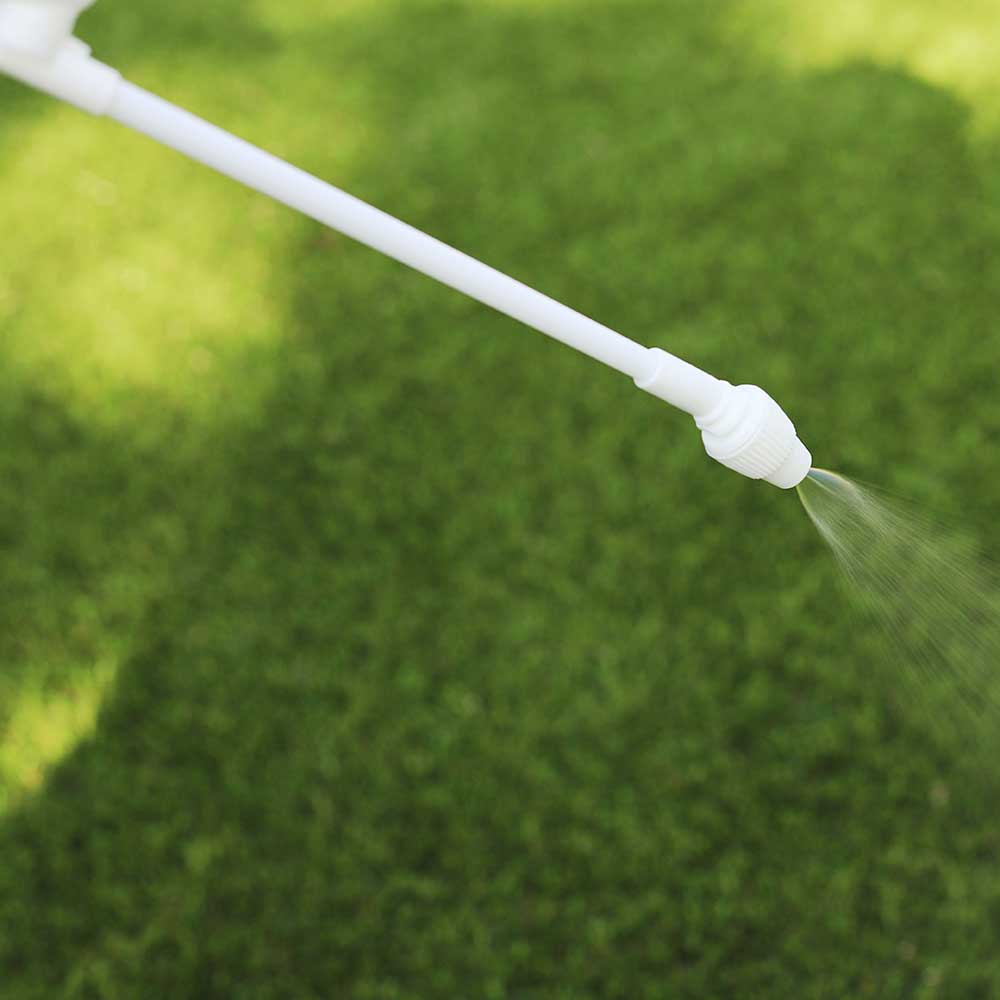
Spray it directly onto the affected area, allow it to work, and you are done. No mixing, no scrubbing, no pre-treatment required.
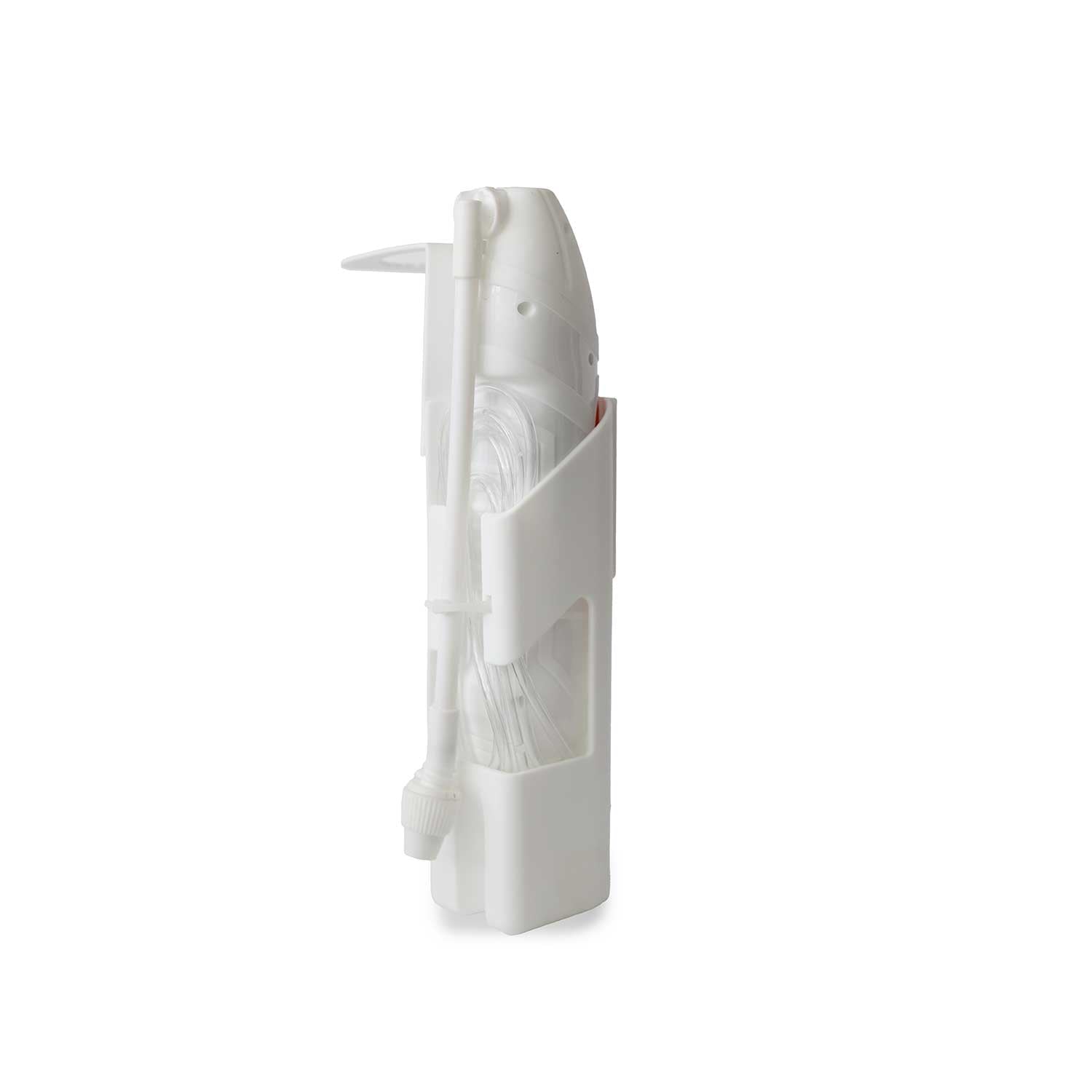
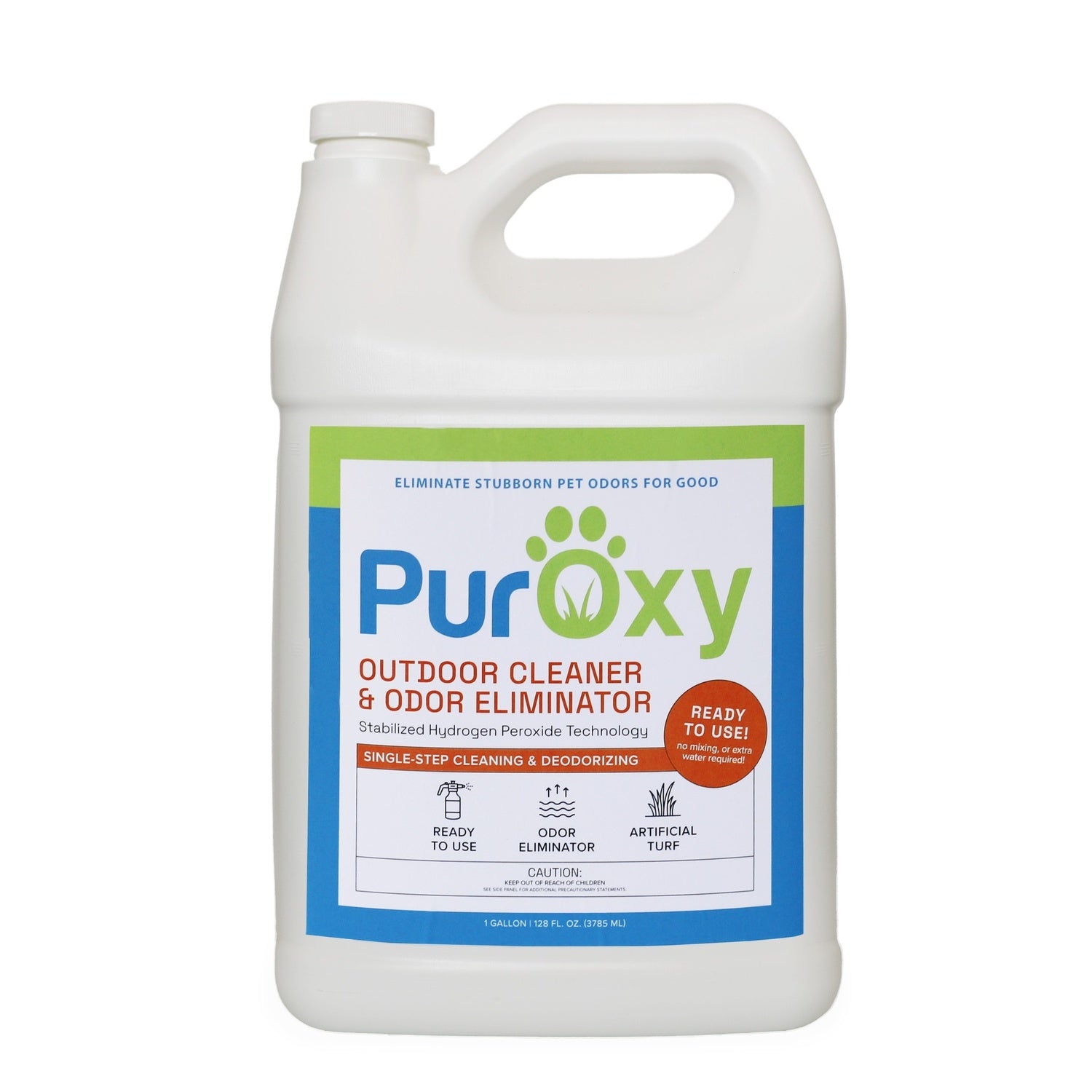
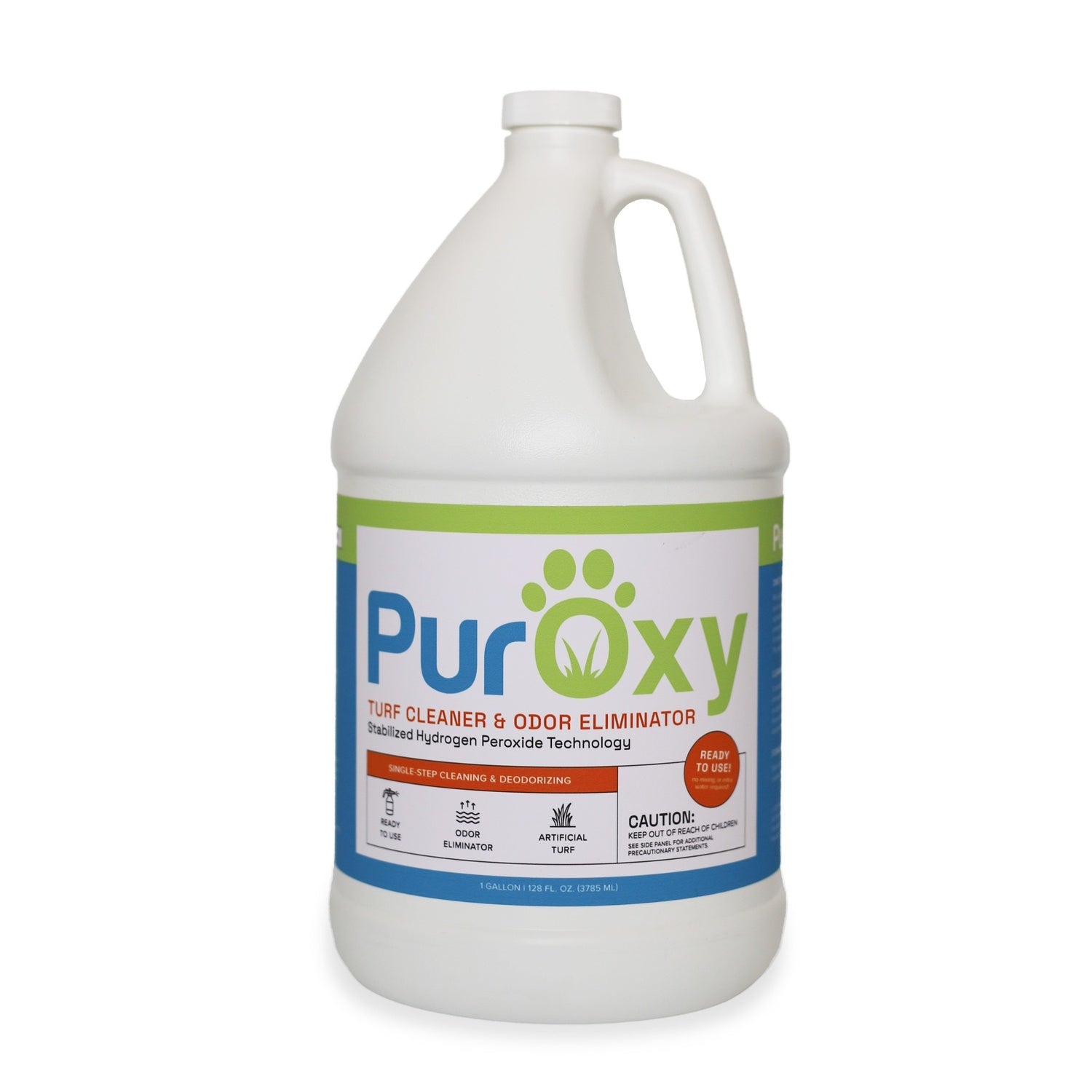
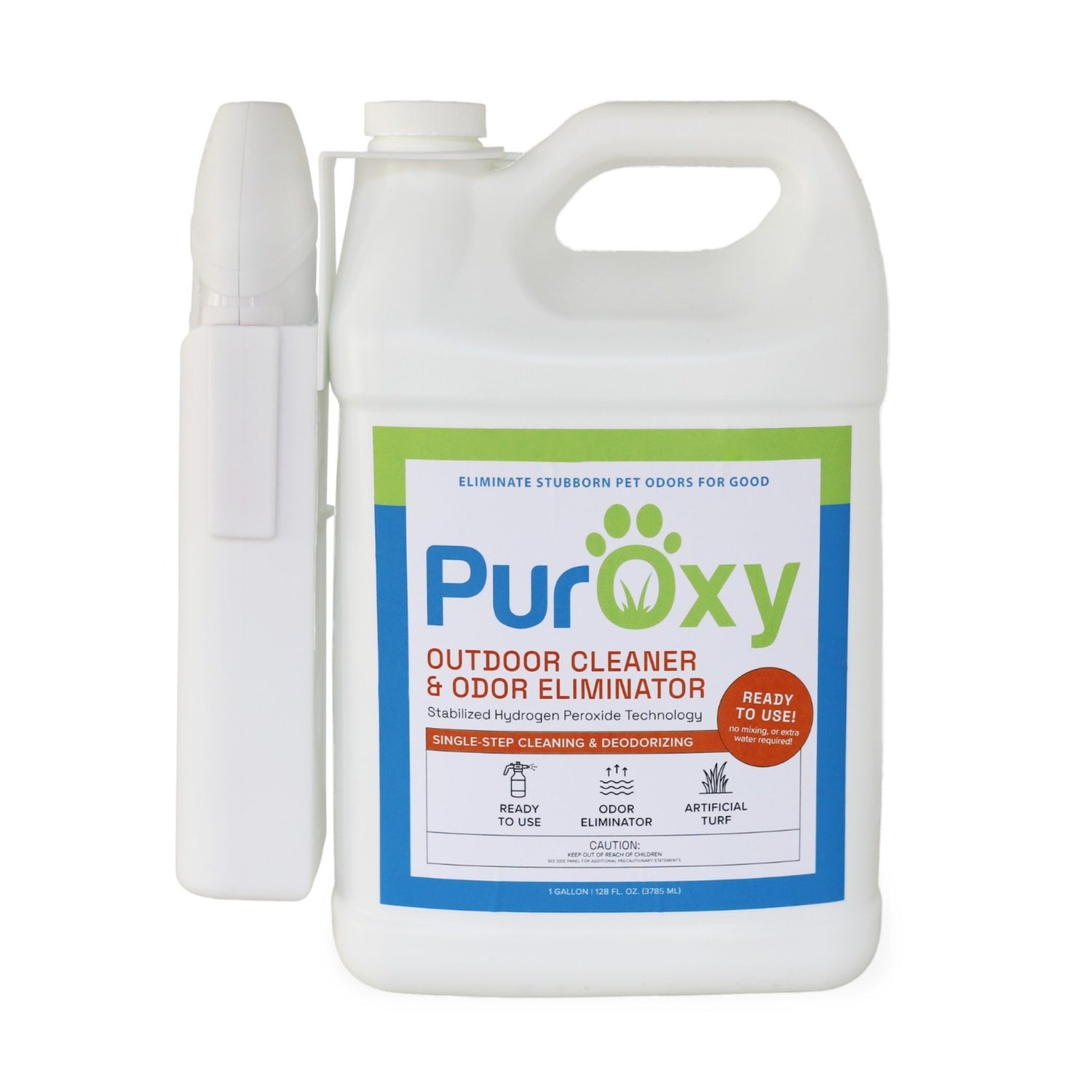
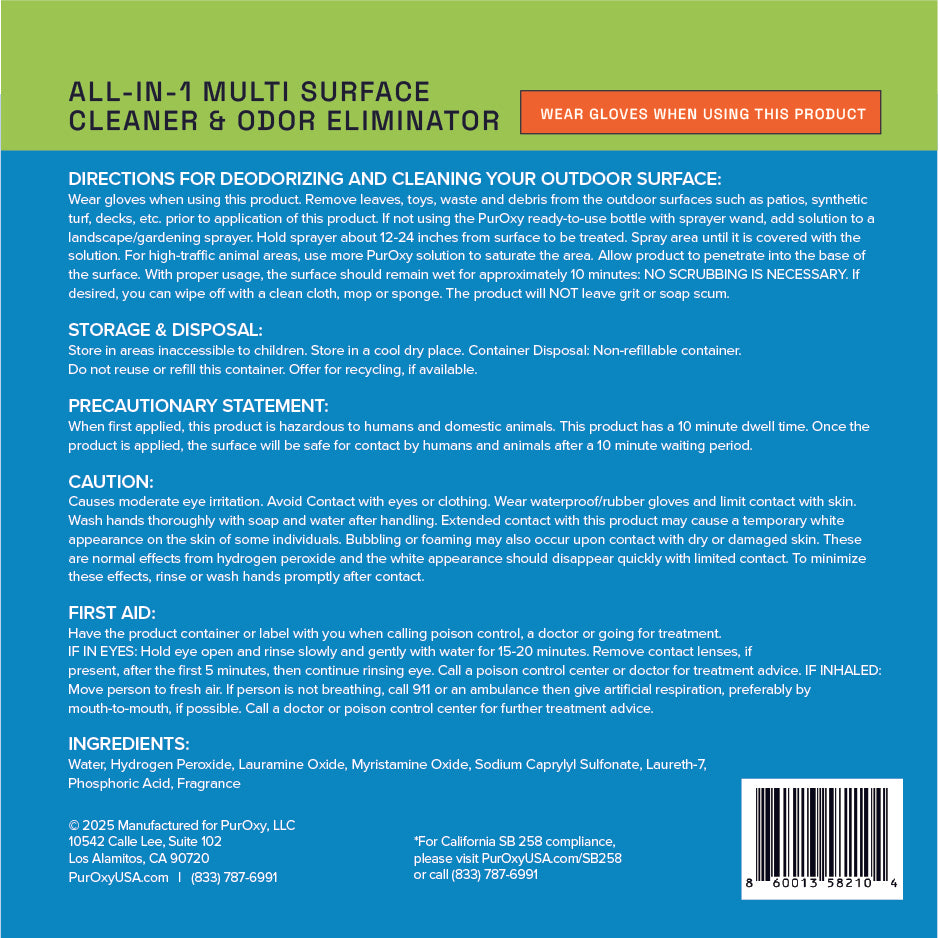
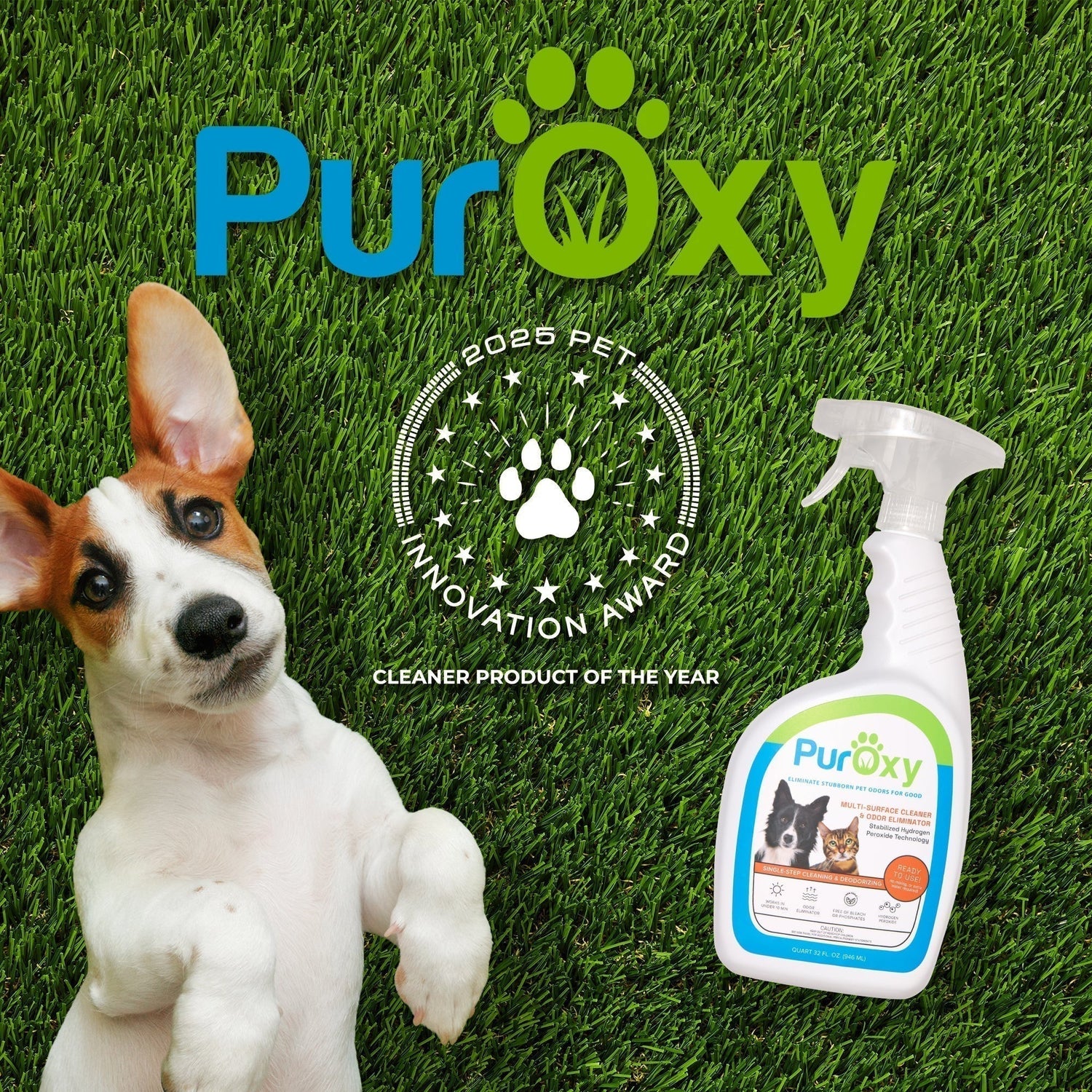
PurOxy is purpose-built for exactly this job. It uses Stabilized Hydrogen Peroxide Technology to destroy odor-causing germs at the source — not mask them. It is ready to use straight out of the bottle with no mixing required, works in under 10 minutes, and is completely free of bleach and phosphates. Safe for daily use and safe for your pets and family. Get it at puroxyusa.com.
Step 3 — Brush the Turf Fibers
After treatment, use a stiff-bristle brush or a turf rake to lift the fibers back up and redistribute the infill evenly. This improves drainage for future use and helps the cleaner work deeper into the infill layer.
Long-Term Prevention: Building a Maintenance Routine
One treatment will fix the current problem. A routine prevents it from coming back.
Weekly:
- Rinse high-traffic areas (anywhere your dog frequently urinates) with a garden hose
- Apply your hydrogen peroxide cleaner to those same areas, even if there is no visible stain
Monthly:
- Do a full turf inspection — check the drainage holes in the backing and make sure they are not clogged
- Brush the entire turf surface to keep fibers upright and infill even
Seasonally:
- Consider a deep clean before summer, when heat amplifies odor the most
- If you have multiple dogs or heavy use, increase cleaning frequency accordingly
Want a full maintenance routine? Our complete artificial turf cleaning and maintenance guide breaks it down by day, week, and month.
When the Odor Is Already Severe
If the smell has been building for months, a single application may not be enough. Here is the escalated approach:
- Rinse the entire turf surface thoroughly with a garden hose
- Apply PurOxy generously across all affected areas — do not just spot treat
- Let it dwell for 10 minutes
- Rinse lightly, then allow to air dry completely
- Repeat the process 2–3 days in a row for heavily saturated areas
For truly severe cases where odor has penetrated deep into the infill, you may need to consider having the infill professionally replaced — but in most situations, a consistent hydrogen peroxide treatment routine will resolve the problem without that expense.
The Bottom Line
Artificial turf odor from pet urine is not a design flaw in your turf — it is a maintenance problem with a clear solution. The mistake most homeowners make is either ignoring it until it becomes severe, or reaching for the wrong product (bleach, vinegar, enzyme cleaners) that treats the surface without addressing the root cause.
The right tool is a stabilized hydrogen peroxide formula that oxidizes uric acid and destroys bacteria where they live — in the infill.
PurOxy is that product. Ready to use, no-rinse, safe for daily use, and proven on artificial turf. If your backyard smells like a dog park, it does not have to.
Not sure which product to use? See our best artificial turf cleaners for pet urine in 2026 roundup.
Disclaimer: Always follow manufacturer guidelines for your specific turf product. Test on a small area first if your turf is older or has specialty infill.
Michael Maxwell is the COO of PurOxy and brings over a decade of experience in retail and consumer sales. He oversees product development and go-to-market strategy for PurOxy's line of pet-safe outdoor cleaners, including the 2025 Pet Innovation Award-winning PurOxy Outdoor Cleaner.