If you've ever scrubbed a patio or artificial turf after your dog has used it repeatedly, you already know water and soap don't cut it. The smell comes back. In the heat, it gets worse. That's because urine odor isn't a surface problem — it's a chemistry problem, and it needs a chemical solution.
Hydrogen peroxide is one of the most widely recommended options for pet odor removal, but there's real confusion about how it actually works, whether it fully neutralizes urine, and why some formulas outperform others. Here's a clear look at the science.
What urine actually contains
Dog urine is mostly water, but the compounds responsible for odor and staining are what make it so hard to deal with. The main ones are:
- Urea, a nitrogen-based waste product
- Uric acid, which forms crystals that bind to surfaces
- Ammonia, which develops as urine breaks down
- Creatinine and various proteins
- Bacteria, which accelerate decomposition
Uric acid is the most stubborn of these. It doesn't dissolve easily in water, and it bonds to porous materials like concrete, turf infill, and fabric. Once it dries, it becomes significantly harder to remove.
Why urine smells worse over time
Fresh urine actually has a fairly mild smell. That sharp, pungent odor on older stains? That's bacterial activity. As bacteria break down urea and uric acid, they release ammonia and sulfur-based compounds called mercaptans — and those are what hit you when you step outside on a warm day.
Heat and humidity make everything worse. A turf area or patio that smelled fine in winter can be genuinely unpleasant by midsummer. Nothing new is necessarily happening — bacteria have just been quietly building up in the material, and the heat makes them work faster. What was a slow, low-level process underneath the surface becomes a lot more noticeable. Fragrance doesn't change any of that. It doesn't slow the bacteria down, and it doesn't stop the smell from coming back.
How hydrogen peroxide works on urine
Hydrogen peroxide (H₂O₂) is an oxidizing agent. When it contacts organic compounds like uric acid, urea, and odor-producing bacteria, it releases oxygen molecules that break apart the chemical bonds holding those compounds together.
That process — oxidation — works completely differently from what soap or water does. Soap lifts surface dirt. Oxidation actually changes the chemical structure of odor-causing molecules, breaking them down into simpler, odorless byproducts like water and carbon dioxide.
With urine specifically, hydrogen peroxide goes after the problem from several directions at once: the uric acid crystals behind long-term odor, the bacteria producing ammonia and mercaptans, and the pigments responsible for yellow staining. That's a real advantage over enzyme-based cleaners on outdoor surfaces — enzymes use biological catalysts to digest organic matter and can do a decent job on fresh stains, but dried, crystallized uric acid that's already bonded into a surface is a harder problem. Once you're dealing with that, oxidation tends to be more effective because it goes after the source directly rather than working around it.
What "stabilized" hydrogen peroxide means
The 3% hydrogen peroxide you find at a drugstore breaks down fast. Light, heat, and contact with organic material all accelerate that process — sometimes quickly enough that the formula has burned through most of its potency before it's had a real chance to work. A good portion of that active oxygen escapes into the air while the solution is still sitting on the surface, which means less of it is actually doing anything useful.
Stabilized hydrogen peroxide solves this by using chemical stabilizers to slow that breakdown down. Instead of fizzling out on contact, the molecule stays active long enough to push into the surface and react with the compounds causing the odor. On porous materials like artificial turf, concrete, and pee pads — where urine soaks in rather than sitting on top — that extended contact time is often what separates a cleaner that actually works from one that just looks like it does.
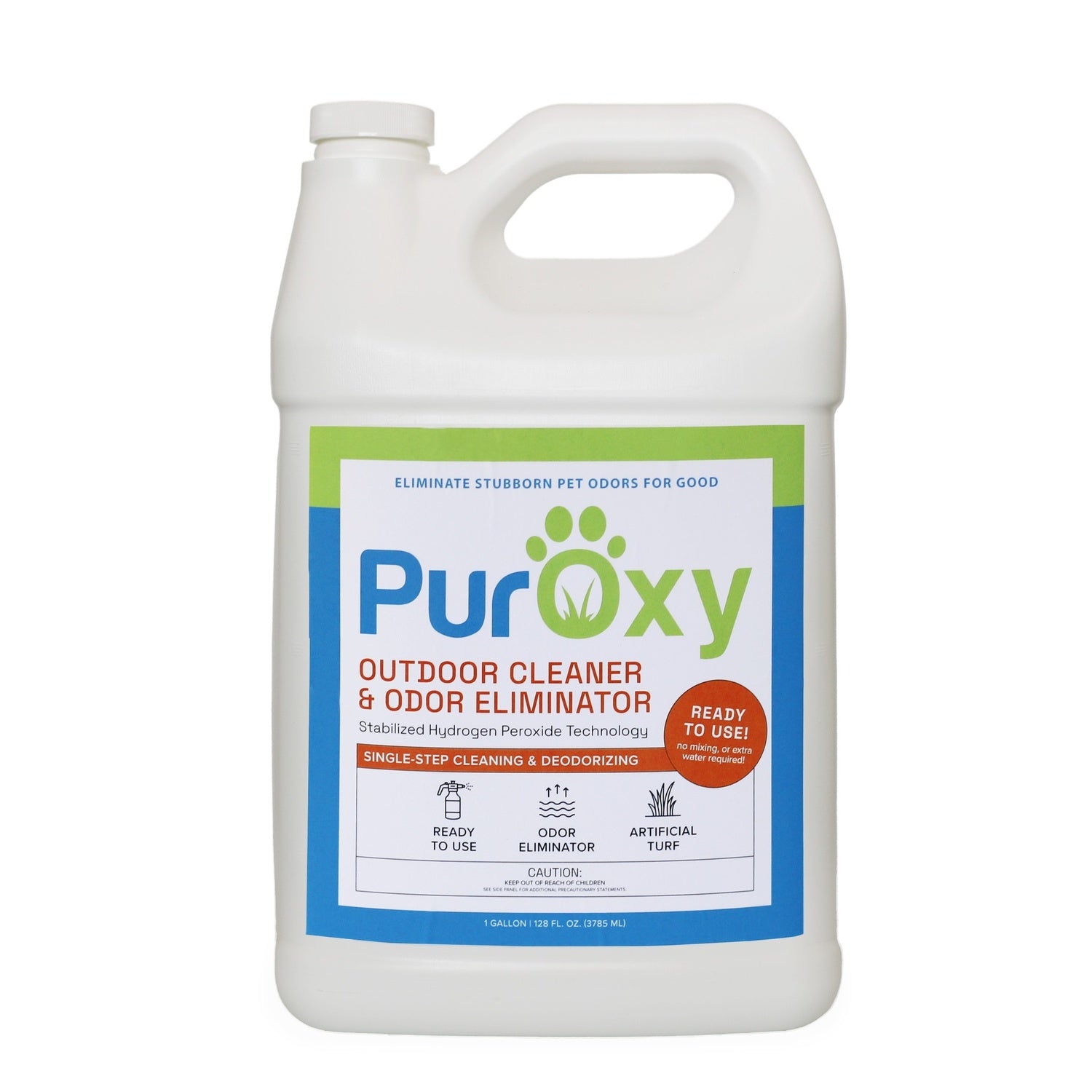
PurOxy uses stabilized hydrogen peroxide as its core technology. The formula is designed to stay active long enough to oxidize uric acid and eliminate odor at the source, not just at the surface. Learn more at puroxyusa.com.
Does hydrogen peroxide fully neutralize urine odor?
It depends on the concentration, the formulation, and the surface you're treating.
A single application of diluted 3% hydrogen peroxide to a heavily used area probably won't get the job done. The concentration is too low, and the molecule breaks down before it can reach uric acid that's already soaked into the material.
A stabilized, properly concentrated formula is a different story. It breaks down uric acid, kills odor-causing bacteria, and goes after the smell at the source rather than covering it up. That said, one application won't undo months of buildup — consistent use is what keeps things from getting ahead of you.
Surface type matters here too. Artificial turf with rubber crumb infill pulls urine down into the base layer, out of reach of anything that only works at the top. Concrete keeps absorbing it over time. Pee pads are built to soak it up from the start. On all of these, a cleaner that stays at the surface never actually reaches the problem — which is why stability and contact time are just as important as concentration.
Where hydrogen peroxide works best for pet urine
Hydrogen peroxide is a particularly good fit for outdoor surfaces that can't go in a washing machine or get blasted with hot water.
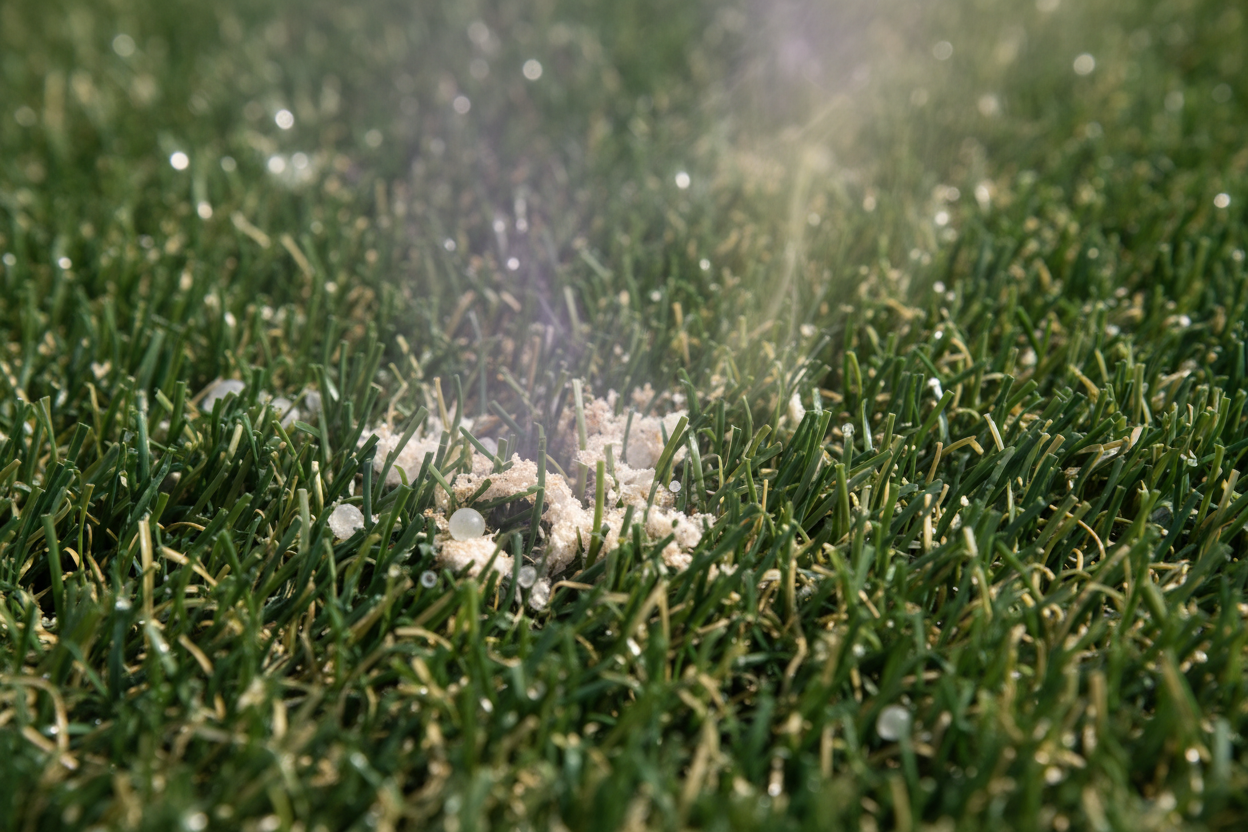
Artificial turf is one of the hardest surfaces to clean because urine passes through the blades and settles into the infill and backing. A surface-level spray won't reach it. Stabilized hydrogen peroxide penetrates into the turf structure and oxidizes uric acid where it's actually sitting.
Patios and concrete pull urine down into the material itself. Scrubbing the surface doesn't touch what's already absorbed. Oxidation works into the pores and breaks down the compounds where they've settled.
Pee pads are designed to be disposable, but that doesn't mean you have to swap them out every single time. Cleaning and deodorizing between changes can stretch their life considerably — and PurOxy is formulated specifically to work on pee pads for that reason.
Decks and outdoor furniture trap odor in wood grain and fabric where most cleaners never reach. Hydrogen peroxide gets into those spots without bleaching the surface or leaving anything behind.
What to look for in a hydrogen peroxide cleaner
Not all hydrogen peroxide products perform the same way. If you're buying a cleaner specifically for pet urine, a few things actually matter:
- Stabilized hydrogen peroxide, not drugstore-grade. Stability determines how long the molecule stays active after application — and that directly affects how well it penetrates porous surfaces where urine has already soaked in.
- Ready to use. Products that require dilution introduce inconsistency. Mix it wrong and you're either wasting product or applying something too weak to work.
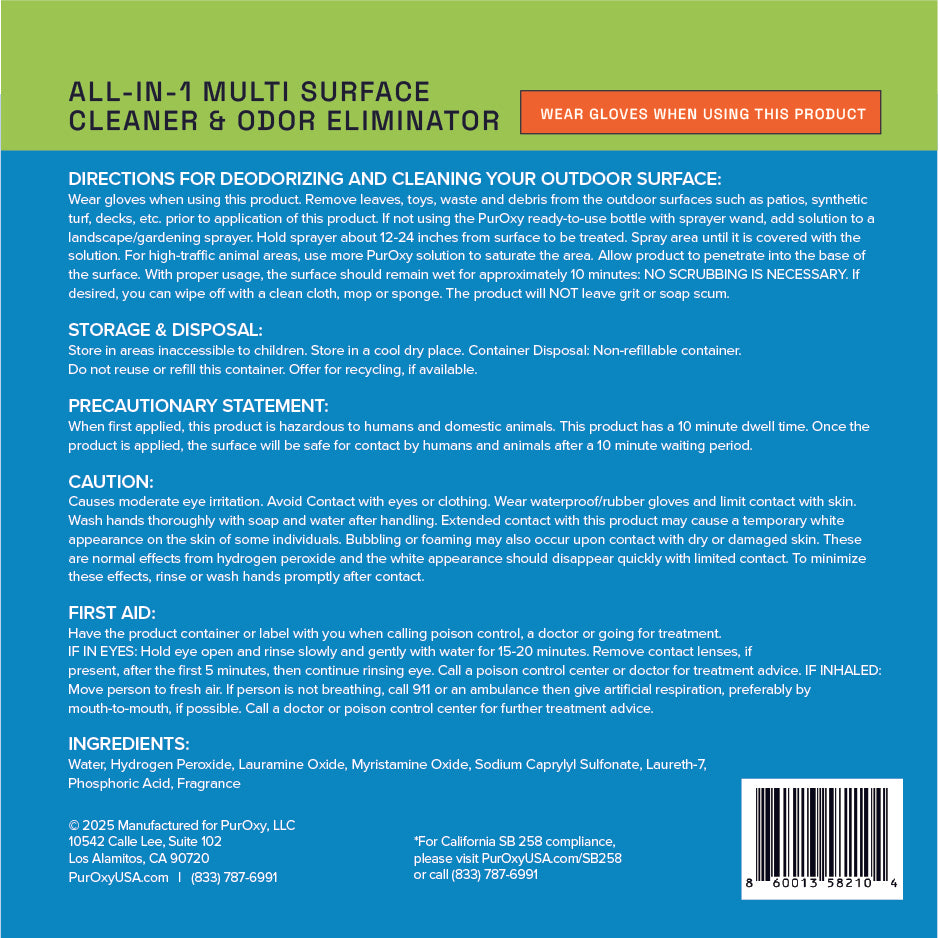
- No bleach or phosphates. Bleach can damage artificial turf fibers and isn't safe around pets or children. Phosphates contribute to runoff issues and aren't needed for odor elimination.
- Biodegradable formula. Hydrogen peroxide naturally breaks down into water and oxygen. A well-made product won't leave harmful residue on surfaces your pets walk on every day.
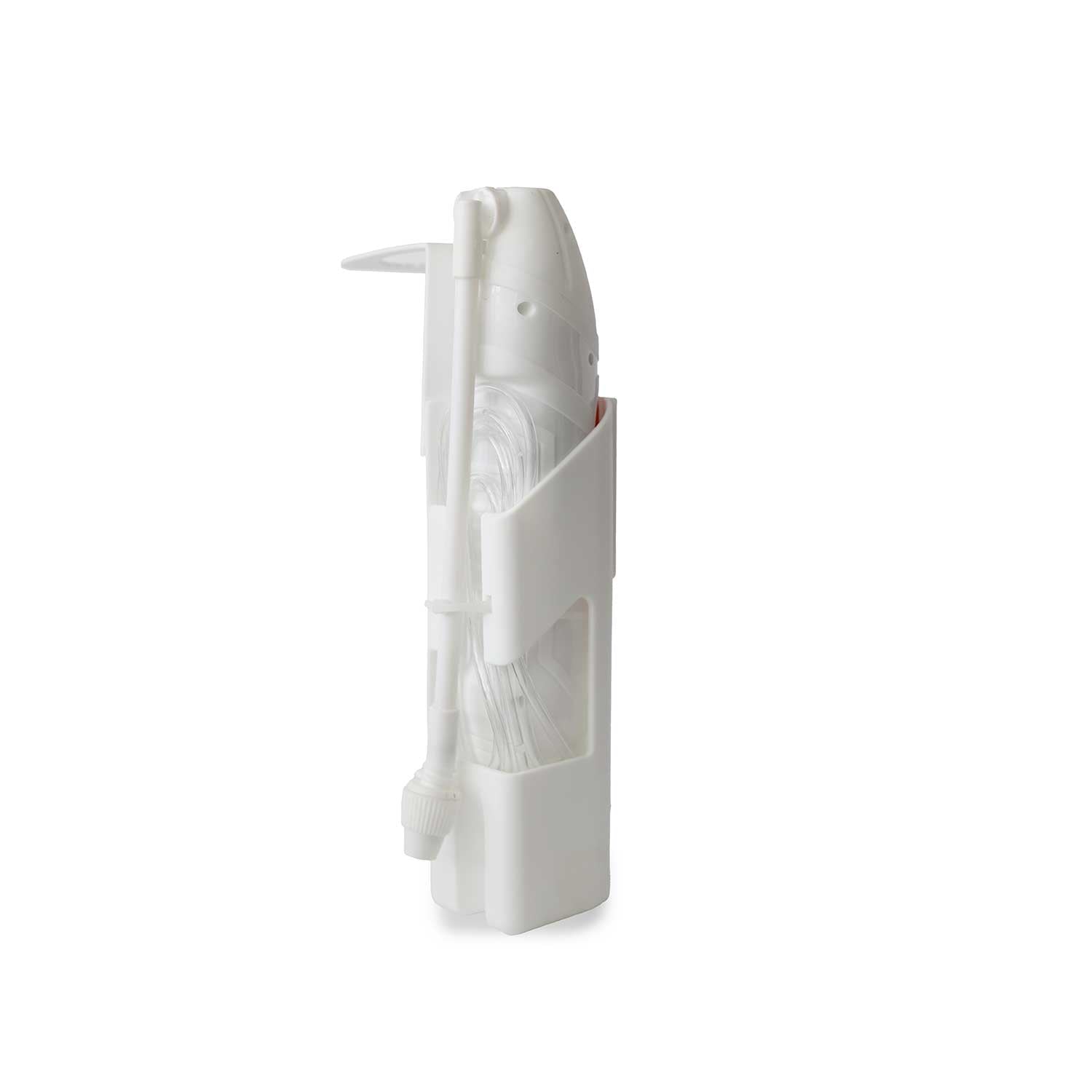
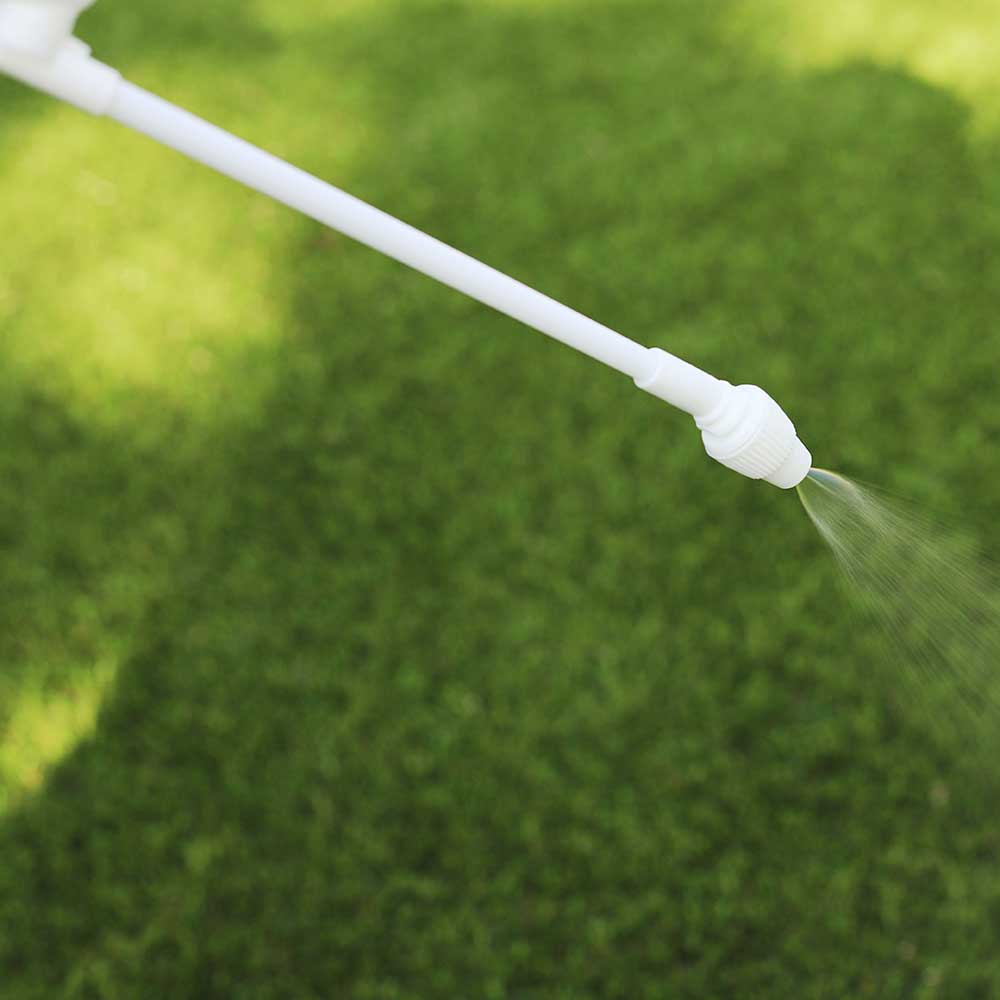
PurOxy checks all of these. It's a ready-to-use spray at $49.95 — no mixing, no rinsing, works in under 10 minutes, and safe for daily use around pets and children. Find it at puroxyusa.com.
FAQs
Does hydrogen peroxide completely eliminate urine odor?
It can, but formulation matters. Drugstore-grade 3% hydrogen peroxide breaks down too quickly to fully penetrate porous surfaces. A stabilized formula stays active long enough to oxidize uric acid and kill odor-causing bacteria at the source — which is where complete odor elimination actually happens.
Is hydrogen peroxide safe to use around pets and children?
Hydrogen peroxide naturally breaks down into water and oxygen, so a properly formulated product leaves no harmful residue. PurOxy's biodegradable formula is safe for daily use around both pets and children.
Why does my patio or turf still smell after cleaning?
When a cleaner only works on the surface, the uric acid crystals and bacteria sitting deeper in the material just keep doing their thing. The odor comes back because nothing actually reached the source. A stabilized hydrogen peroxide formula gets further in and oxidizes those compounds instead of covering them up.
How is stabilized hydrogen peroxide different from what's in a first-aid kit?
First-aid hydrogen peroxide is typically 3% and unstabilized. It starts breaking down the moment it hits organic material, which limits how far it can penetrate before it's already lost most of its potency. The stabilized version uses chemical stabilizers to slow that process down, keeping the molecule active long enough to actually reach urine that's soaked deep into a surface.
Can hydrogen peroxide damage artificial turf?
A properly formulated product without bleach or harsh additives won't damage turf fibers. PurOxy contains no bleach or phosphates and is designed for regular use on artificial turf, patios, and pee pads.
How often should you apply hydrogen peroxide cleaner to outdoor surfaces?
It really comes down to how much use a particular spot gets. High-traffic areas generally do better with daily or every-few-days application — keeping up with it prevents uric acid from building up to the point where the odor becomes genuinely hard to shift. PurOxy is built for that kind of routine use.
Does hydrogen peroxide work on old, set-in urine stains?
It's one of the stronger options for set-in stains because oxidation breaks down uric acid crystals at a chemical level — it's not just rinsing away what's on the surface. Heavily saturated spots may need a second pass, but in situations where enzyme cleaners and soap haven't done the job, a stabilized formula tends to be what finally makes the difference.